Showing posts with label hummus. Show all posts

Tuesday, May 3, 2011

hummus with lamb


If you are looking for traditional lamb and hummus then this page will not help you. If you are looking for the sorts of things that you can get away with and still come close or possibly exceed, then do, read on.

Garbanzo beans (chickpeas) and brown rice are ground to powder with peppercorn and sea salt in an electric coffee mill. The combined powder is seasoned further and cooked in double the volume of chicken broth along with miso paste and peanut butter to produce a wet mixture its viscosity verging on that of a sauce. 

A lamb patty of combined meat and seasoning is fried in a pan. 

An egg is fried in the same pan. 

Aerogarden lemon basil to top.


Now I ask you, where else are you going to see this? Nowhere! And I wonder, why not? This technique, a kitchen hack of my own invention, and if it has already been invented then excuuuUUUUUUUUUuuuse me, has seemingly infinite variations. Any legume or grain can be treated this way, seasoned by any means imaginable, and brought to a wide range of consistencies. The resulting paste can be poured into an oiled form or onto a flat surface, chilled, then cut and served directly or fried, deep fried, or baked or broiled. The powder can be used to make crackers, added to breads, thicken soup, included in meat-loafs for texture and to retain fat while contributing their own alimentary salubrious elements. The beauty is twofold: 1) the powder is instant. 2) the entire seed or grain or legume is used, so all of its nutrients retained and all of its fiber that is usually lost to processing.  


Ordinarily hummus will have lemon, garlic, onion, tahini, and olive oil. It will be limited to chickpeas. Hummus will also have cumin, one of my favorite spices, but I left it out here because -- what, do you think I'm insane? 

I just now read online several commenters state flatly that tahini tastes nothing at all like peanut butter. This does not comport with my experience, and I would like to box it out with those commenters until one of us falls down bloody, but what would be the point in reacting violently? I have tried three different brands, and by my assessment, all three brands tasted nearly exactly like peanut butter. Almost indistinguishable. In this I am disappointed because I hoped for it to taste like sesame seeds taste. I even made my own tahini twice, once using non-hulled seeds and the second time using hulled seeds. They both tasted nearly exactly like peanut butter. For the record, the non-hulled seeds, that is, seeds with their hulls still on, absorbed so much olive oil that it became mostly olive oil by weight. The seeds kept absorbing and absorbing and absorbing until eventually it was ridiculous so I switched to water then it absorbed that ridiculously too. So the moral of the story is ... ¿ Weirdly, the tahini made from non-hulled seeds was more fully nut tasting than the tahini processed from hulled seeds.

South River miso added here only because I haven't had any miso for awhile. It is almost as if my body suggested it and not my mind. There I was, tasting the brown sludge in the pot for possible adjustments and it seemed to be already perfectly fine. There was no addition whereby I could actually improve the taste. I considered all the customary hummus ingredients but rejected them one by one because either the element was already in the lamb or because I didn't feel like it, then BLAM! Just like that, the idea for peanut butter and miso appeared in my mind like a picture enhanced by an audio specialist. 

Now. I ask you again, where are you ever going to see miso mixed with hummus? In a miso recipe book? No, you will not see it there. 


Saturday, December 11, 2010

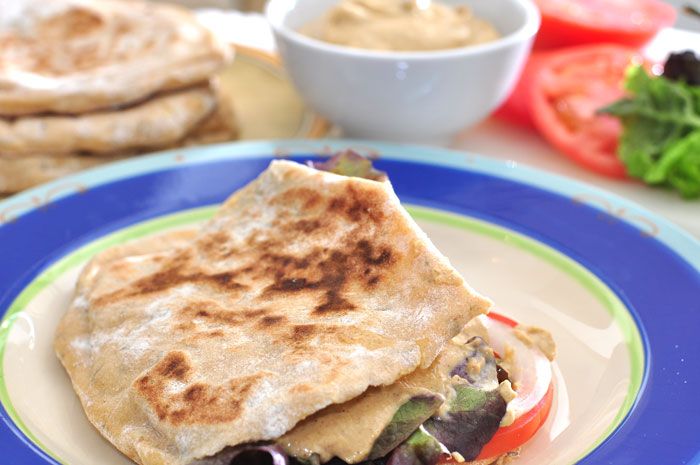
hummus on pita


The impetus for this arose from the tin of chickpeas opened yesterday. Only 1/3 of the tin was used then which left 2/3 remaining in the refrigerator. What else could be done with held over chickpeas besides mixing them with a side? Season them as a stand-alone side dish, include them in a homemade soup, smash them into a dip, coat them with a batter and deep fry them, use them in a dough, include them in a mixture for biscuits, cookies, bake in a cake, introduce into a pancake batter, use as a filling for dumplings? Come to think of it, there does seem a lot of things could be done with chickpeas other than hummus, and hummus need not be chickpeas. 

Had I been thinking properly, I would not have missed another opportunity to include the mild New Mexico chiles also in need of a purpose. But today I have a good excuse: I was tired. A new friend asked to borrow my carpet cleaner. It is a very good carpet cleaner, and rather expensive, worthy of borrowing and certainly lending, but I must protect my investment and there is a bit of training involved. So I went along to clean the carpet with him, instructing and supervising. If he knew how much the solution cost, he wouldn't ask such a thing, and I am loathe to mention it,  but that is another matter. I must say, carpet cleaning is an exhausting business when done properly, and oi, such a carpet. It wasn't just a zippy-zap in-and-out job. This problem carpet with its countless difficult stains took hours of special attention. I am well chuffed my friend now has a clean floor. 
1) Make the pita
2) Make the hummus

It wouldn't do to have a bunch of pitas around.  This will be a small batch. 3/4 cup water, and even that is an excess. Usually I would simply fry the bread, now that is a very quick way to do the same thing, and I do like to watch it blister and puff in the pan, but this time I intend to bake them to see how that turns out. In the end, I learned frying is more simple, faster, more certain, uses less energy, attains better results.  


The whole wheat flour used here was milled at home from grain dug out of the bins at Whole Foods. I do love those bins. They're fun. Home milling is a step in a fresh dimension, possibly a late 60's West Coast hippy dimension, I do not know for certain -- what do I look like, a social historian over here? The advantage is the result is fresh, and it is the entire grain is all ground up. Bang. There it is. It is not possible to be more truthfully 100% whole wheat than that. Unlike commercially milled whole-wheat which is separated into its constituent elements and then recombined in inexact proportions. This is the distortion of the language of industry, and stands at the heart of the hoax played on an unsuspecting public. They are attempting, and largely succeeding, to convince trusting unwary customers that when "100% whole wheat" is spoken, that it is exactly what is being offered. It is not. Yes, they have returned 100% of the types of elements that were separated out, but in proportions that suit their purpose, not in proportions to the original grain and certainly not to your sense of what  the meaning of the phrase "100% whole wheat" is. (Much as the carpet cleaning industry language uses the phrase "steam cleaning." I challenged them on this. There is no steam involved, in the sense of water boiling until it vaporizes into steam, as we all understand the meaning of steam to be from our earliest science lessons about the various states of water.  Nonetheless, the entire industry advertises "steam cleaning" knowing that customers logically expect actual steam. It is just very hot water. LIES!)


Olive oil and sea salt are added to the dough after the yeast is established and before the final addition of flour. This is slightly more than 1/4 whole wheat, 3/4 AP flour.


I love playing with dough. It is like Arts and Crafts, except better because you can eat it. 


Dough is kind of  like clay. Abuse it a bit, pound it and stretch it, roll it and smash it. It improves from rough handling. Form it into shapes, and it obeys your will. Those cells in there are living. How can they take it? The thing that amazes me is not only do they accept all that, they thrive on it. 


Even this ↓ doesn't hurt them. 


Or this ↓


And certainly not this ↓


See? They love it. ↓


Okay, now baking ↓ DOES hurt them. 


But aren't they beautiful?


So there's that.  It appears by the photographs that it all happened in sequence, and it did, but the hummus was prepared between the rising and the baking. It is certainly possible to do one then the other but that is not how this happened. 


You would expect tahini to have the distinct flavor of sesame, but it tastes nearly identical to peanut butter. I wouldn't hesitate to substitute one for the other. Once I made tahini by blending sesame seeds from the bulk bins. I did not know what 'husked' meant. Did it mean the seeds were de-husked, or did it mean the seeds were still enhuskenated.  (stop underling my words in red, you pissant spellchecking martinet.) Comparing the seeds side by side did not show any visible difference. So I got non-husked, which turned out to have their husks still on. When processed with an immersion blender, the husks kept absorbing the oil within the seed turning it impossibly stiff so I added olive oil. The husks absorbed that too so I added more olive oil, then more olive oil, and more olive oil, and more olive oil, and more olive oil, until finally I decided I didn't want too much olive oil. What was I, insane?

Then I went back to Whole Foods and got husked sesame seeds and did it again. That went a lot better. Even so, the tahini made with the husks still on tasted much better than any tahini I had before or since. So the moral of the story is: husks contribute significantly to the betterment of foods, and their removal if for reasons of refinement, is quite counterproductive. 

Half the lemon was used for this amount and the mixture came out very lemony indeed. I like that.  

Za'atar is a Middle Eastern thing. It is a mixture (like curry) that  contains oregano, thyme, savory, dried sumac and salt. This one has sesame seeds. Actually, I haven't read the jar, I noticed them in there, too few to have any noticeable effect. Some hummus recipes call specifically for sumac. So that shows you to embellish your own hummus pretty much however you wish. 

For the first time in my life, possibly the second, I finally learned to back off a bit from the spices. It did not even occur to me to add any type of chile powder, which seems natural for a thing like this, and I had to move half a dozen of them out of the way to get at the za'atar in the freezer door. 


This little processor for the Bosch is neato. It is more convenient than the Cuisinart, I think. 


A friend in San Francisco, who for reasons of internet security must remain nameless, but whose initials are Dale Thompson

oops

made two of these bowls for me. He made another set of a different kind also, and I treasure them like treasures that are treasured treasuredly. 


Friday, December 18, 2009

hummus sandwich


Homemade hummus. Homemade flatbread. I love soaking dried beans and watching them swell but I didn't do that this time. Canned chickpeas. How's that for L- A -Z- Y ? I'm afraid I didn't drain them enough. That was stupid. I remember reading in a recipe to use some of the liquid in the can so I did. Won't do that again. I didn't have proper hummus spice, sumac, which confounds me because I remember buying it specifically and I couldn't have possibly used it all already. I think CIA goons are sneaking in here when I'm sleeping and stealing my sumac, and by CIA I mean Culinary Institute of America. But I'm on to them now! I'm going to start hiding my spices and locking them up like a crackpot conspiracy person. So I used za'atar instead, which for some reason the CIA goons have no interest in stealing. I think I pictured hummus making before and I'm kind of bored photographing it so the only thing I shot was flavoring the olive oil with garlic and simultaneously knocking the edge off the garlic by cooking it.

Hummus

* 1 can of chickpeas, drained
* couple tablespoons olive oil
* 2 crushed garlic cloves
* 1/2 juicy lime
* (see? oil+lime = salad dressing)
* full teaspoon za'atar (a favorite Middle East combination -- thyme, oregano, marjoram, toasted sesame seeds, sometimes others; coriander, savory, fennel, cumin)
* 1/2 teaspoon cumin
* full teaspoon coriander
* 1/2 teaspoon chipotle powder
* S/P
EDIT: Oh! Tahini. About 1/2 cup. I was going for half the amount of chickpeas. Originally I intended to brown a pile of sesame seeds I got from Whole Foods bulk bins, but then I realized I already have a jar of tahini that needs to go, so I used it.

Flatbread

* 1/2 cup water aprox 110℉ / 43℃ (anything under 120℉ / 49℃)
* 1/2 teaspoon commercial yeast
* aprox 1 cup flour, whatever it takes to form a stiff dough. In this case 50% whole wheat (commercial) 50% white flour for bread, but honestly, it could be any type you wish.
* 1 full tablespoon summer savory because I'd like to get rid of it.


Wednesday, May 20, 2009

coarse hummus, pan bread


Loaded with hand-ground spices, un-Middle Eastern and mostly Mexican, coriander, cumin, bay, black pepper, habanero pepper flakes, with tahini, olive oil, and garlic as usual. Not thoroughly blended.

Pan bread prepared with za'atar.

Friday, February 27, 2009

ham sandwich on hummus bread

Late night snack.


The other day I got a wild hair for a sandwich, an unusual urge considering I generally don't keep bread around, but I wanted it, and I wanted it NOW! Which, of course, was then. So I set off to make ordinary bread the fast way, and by fast I mean bread within five or six hours and not bread within the customary three days for my beloved natural culture type bread, so-called sourdough. The bread was started with one and a half cups surplus whey with a scant one fourth teaspoon sugar for the commercial yeast to feast upon. So right there is a slight acid and a faint sweetener acting in conflict. I allowed the yeast to hydrate for a few minutes then added the remainder of the home-milled whole-wheat flour which amounted to about 1/3 cup, and enough flour marketed for bread sufficient to create a wet sticky dough. On a bizarre whim, and I cannot explain this beyond a desire to clean out the refrigerator, I added a few tablespoons of held-over hand-made hummus that was spiced untraditionally. I figured that might help keep the bread moist, boldly, bravely, idiotically setting up myself for disaster.

The dough got off to a slow start. I began wondering if the hummus might prevent it from rising properly. Once it started, though, it really took off. I pushed it back down and did the whole streeeeeetch fold over, rotate 90˚, streeeeeetch fold over, rotate 90˚, streeeeeetch fold over, rotate 90˚,streeeeeetch fold over, rotate 90˚, all within the bowl so that the bowl contained a stack of four dough folds as an unsightly mass. I lifted the mass of dough out of the bowl and with both hands stretched the surface down around the stack as if firmly petting a bowling ball and tucking the ends underneath. No wait. More like applying mouse to an wild Afro so that it lay flat on the person's head with a part down the middle. No wait, wait, wait. More like making a bed in a barracks so that it would pass inspection and a quarter dropped on it will bounce. Yes, exactly like that, except with dough and not a linen sheet or a wool blanket. I shaped it into the general shape of a standard bread pan. See? I did not punch it down like the books say to do, rather, I treated the dough with kindness, but nonetheless with firmness, stretching it in four directions so the yeast was completely redistributed but without having all the air knocked out of it then made it presentable.

Then I erred, miscalculating how quickly the second rise would be inside that bread pan. The dough was wet. I wanted to catch it well before it reached maximum height so it would have impressive oven rise. It was pretty much topped out by the time I got around to it, so when I sliced the top to prevent the airplane hangar effect that occurs by a giant bubble forming directly under the skin, the whole thing deflated unbeautifully and it baked up to be not so pretty.

Le boo, le hoo. My embarrassment was such that my face felt the heat of a massive star gone super nova, or perhaps the heat of a 40 Watt incandescent light bulb. I stomped my foot and huffed, growled like a snarling dog. I almost threw it out in disgust.

But instead, I made a ham sandwich with mustard and lettuce like that one up there ^^^ and that changed my whole attitude. It's delicious. The shape is not so bad. I can live with it. The hummus was a stroke of genius! But if I ran a bakery, or if I was in a competition, I'd privately hang my head in shame, but publicly defiantly proclaim starchily and with a French accent, "I meant to do that!"

Monday, February 9, 2009

hummus and miso soup

With chicken meatballs.

This is ridiculous. I could have used the home-made chicken broth but I forgot about it. Duh. Instead, I made a broth out of two ingredients I'm presently long on, miso and the chile flavored hummus. Into that broth I put meatballs fashioned out of the roasted chicken, the same chicken from which broth was made that I ignored.

The meatballs were started by using the mini cuisinart to process a heel piece of sourdough that was beginning to turn tough and hard along with Parmigiano Reggiano, then in a second round, processed the frozen roasted chicken and diced onion cooked in the same pot everything else would be cooked along with diced celery and garlic in olive oil. All that was brought together with a couple eggs and fashioned into balls.

Chicken meatballs
* piece of sourdough
* Parmigiano Reggiano
* 1 stalk of celery
* 1/4 cup diced onion
* 1 large clove of garlic
* olive oil
* two eggs
* 1/2 cup roasted chicken bits, both light and dark meat
* crushed long pepper
* salt

Broth
* 1 tablespoon miso
* 3 tablespoons chile flavored hummus

Rigatoni pasta cooked in three cups water.

The photos depict:

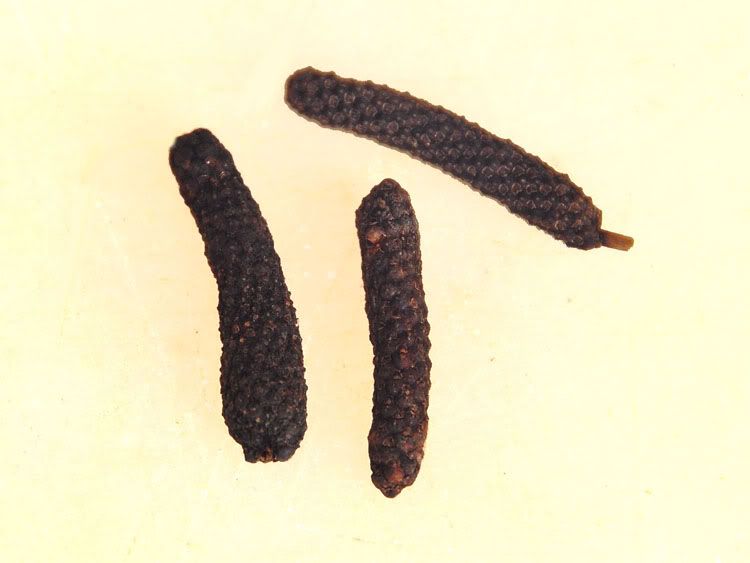
1) a close up of long pepper
2) processed chicken meatball mixture minus the egg
3) finished meatballs
4) chile flavored hummus
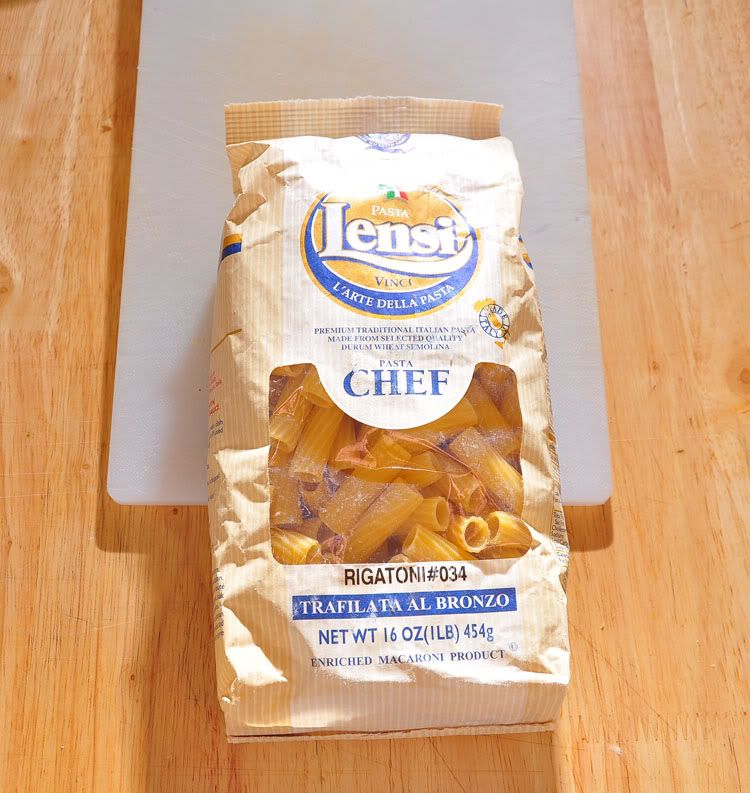
5) rigatoni #34 size, if that means anything, which it shouldn't because it's a number peculiar to the manufacturer
6) finished soup


long pepper close up
chicken meatball mixture
chicken meatballs
chile flavored hummus
#34 rigatoni
finished hummus and miso soup with chicken meatballs
If you could see this being made you might marvel at the laziness.  A medium size pot is used to sweat the onion, celery, and garlic, along with a little dry rosemary and thyme.  The idea is to use that pot to cook the pasta and the meatballs separately using the same water before adding the broth flavorings. Those aromatics are removed to a mini cuisinart following the bread and the Parmigiano which were processed immediately before that in the same mini Cuisinart.  Then the pot is used to cook pasta which is removed and the water reserved to cook the meatballs.  A small amount of water is taken out and put into the bowl that held the meatball mixture and used to thin miso and hummus which are both the consistency of peanut butter.  Then it's all brought together in that overworked pot, the meatballs, which are now gently cooked, the hummus and miso which are thinned with pasta water, and the pasta which was removed so that it didn't overcook while the meatballs cooked.  Ta daaaa.  A minimum of pots to clean.  

Saturday, February 7, 2009

hummus salad

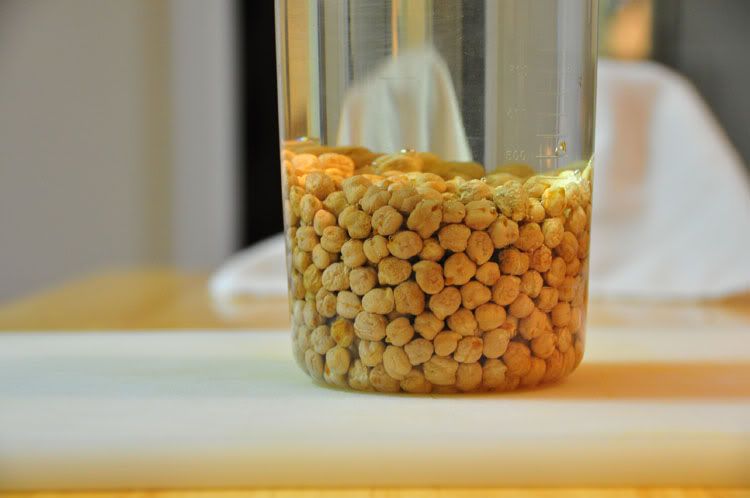
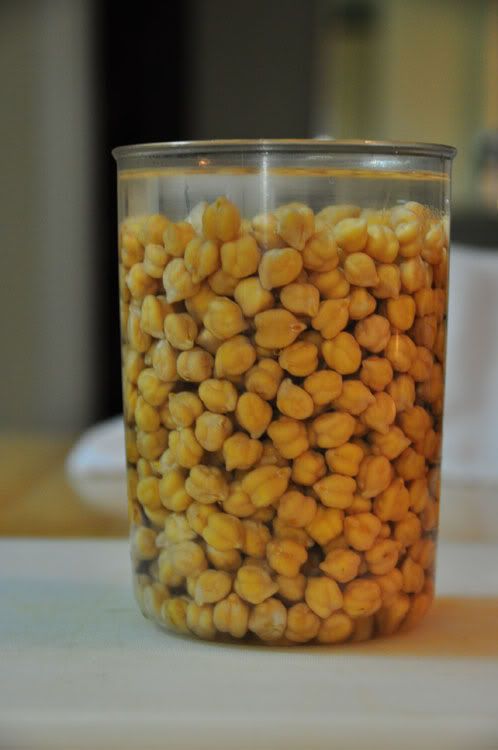
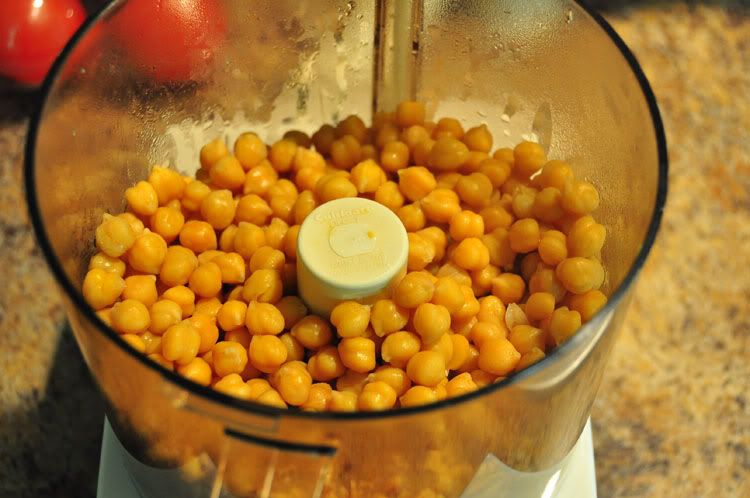
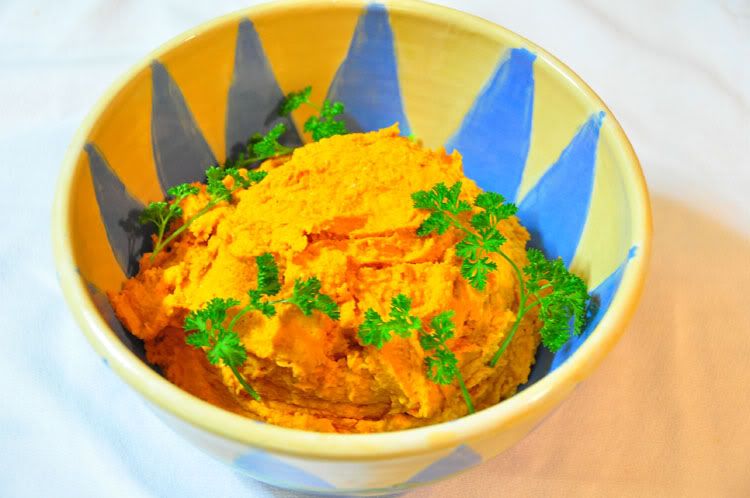
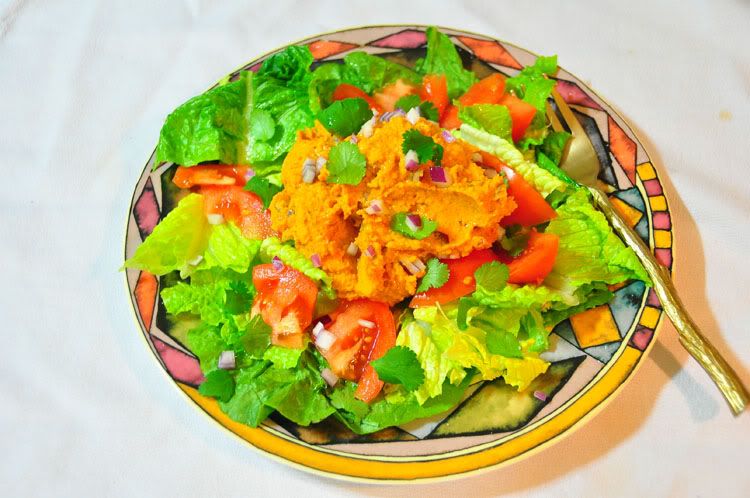
None of the amounts were measured. They were all expressed in the moment, intuited based on the initial amount of dried chickpeas pulled out to soak. That turned out to be a cereal bowl full of chickpeas. The second photograph is the chickpeas soaking. The third photograph is a few hours later after the chickpeas became swollen with water. They were pressure cooked on low, but I wasn't paying attention and when I could smell the chickpea aroma I checked and the controller slipped to high. I didn't want that. They were removed from heat immediately and allowed to cool on their own. They were transferred to the cuisinart.

Not pictured:

* tahini, this was ground from the sesame seeds where I didn't know what "husked" meant. It's like peanut butter. Nobody makes tahini from husked sesame seeds ... except me. Eh, it's fiber, and it tastes great. It's actually better than the stuff I bought.
* a couple of garlic cloves
* juice of one lime
* olive oil sufficient to cover the top
* a few roasted red peppers from a jar
* a teaspoon of aji amarillo chile powder
* Himalayan sea salt.

* diced onion
* parsley
* cilantro

Now, you're probably wondering what sea is located in the Himalayas, so I must answer, this would be an ancient sea from a remote era before the mountains were lifted by India crashing into the continent, as cataclysmic an event as imaginable if in profoundly slow motion. The salt is pink. It's considered the oldest sea salt in the world and although its pinkness suggests high mineral content it's not so high as to excessively displace NaCl, so it's surprisingly salty tasting. I learned this the hard way by putting too much on my cheese crackers. By contrast, the gray Celtic sea salt (French, not British), which is my favorite, is so loaded with minerals that it actually does displace NaCl and so doesn't taste nearly as salty. I've sat there munching the large granules at length until an urgent message was rushed from the back of my brain saying, "What are you doing, you dumb ass, are you crazy?" I find the minerals in that grey sea salt to be positively addictive.


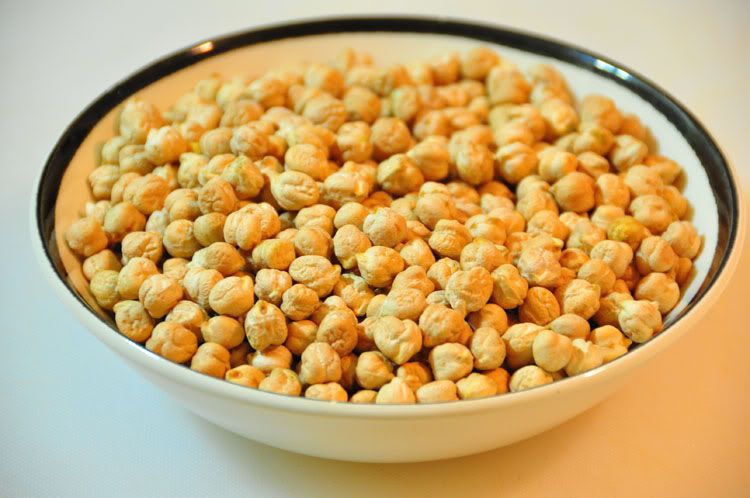
dried chickpeas
chickpeas soaking
chickpeas fully soaked
chickpeas in cuisinart
humus in a bowl
humus salad plated