Showing posts with label Whole Foods. Show all posts

Wednesday, May 28, 2008

sourdough bread

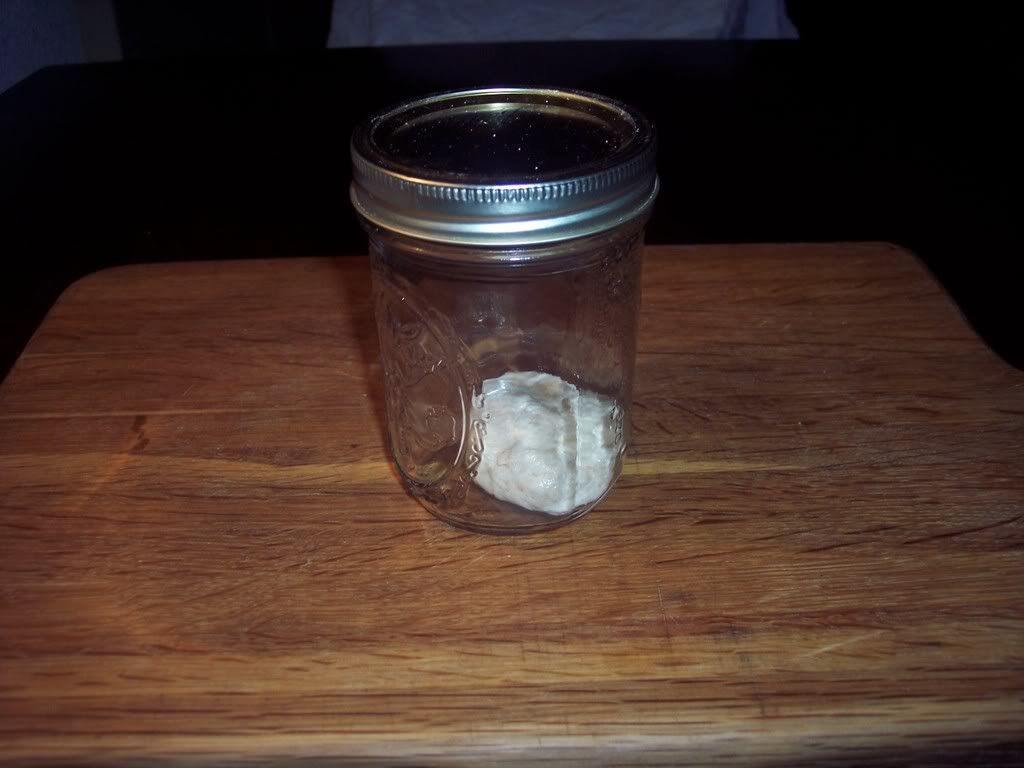
This is the volunteer starter collected  and cultivated from grain in the Whole Foods bins.  Its origin is unknown exactly. 

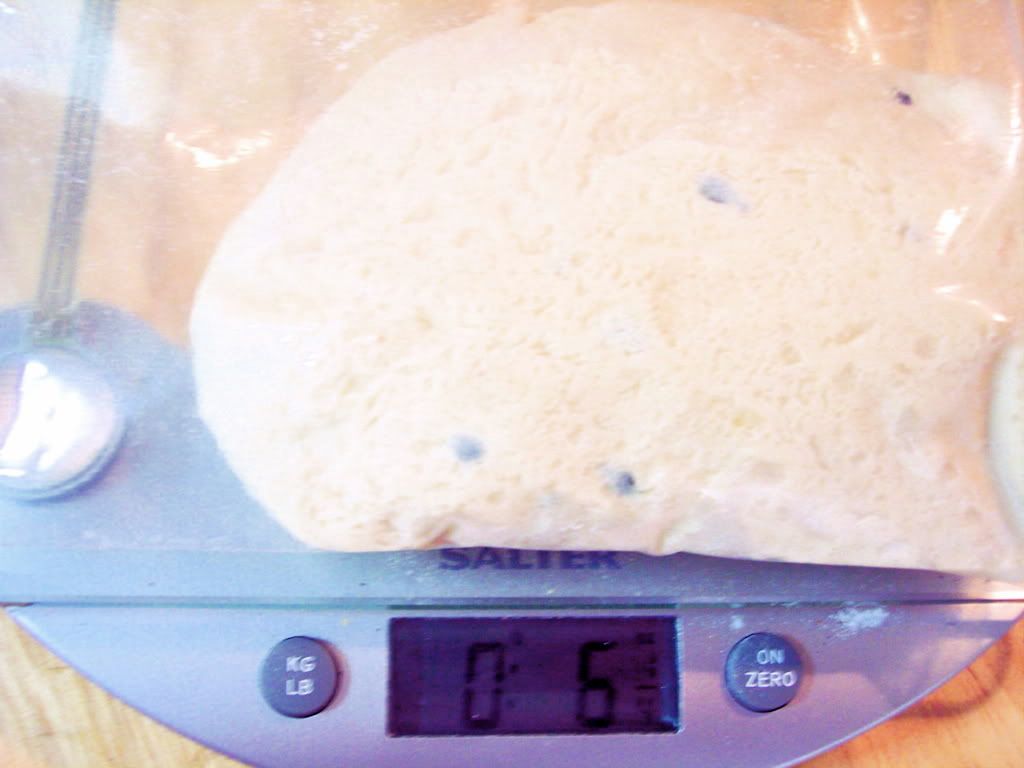
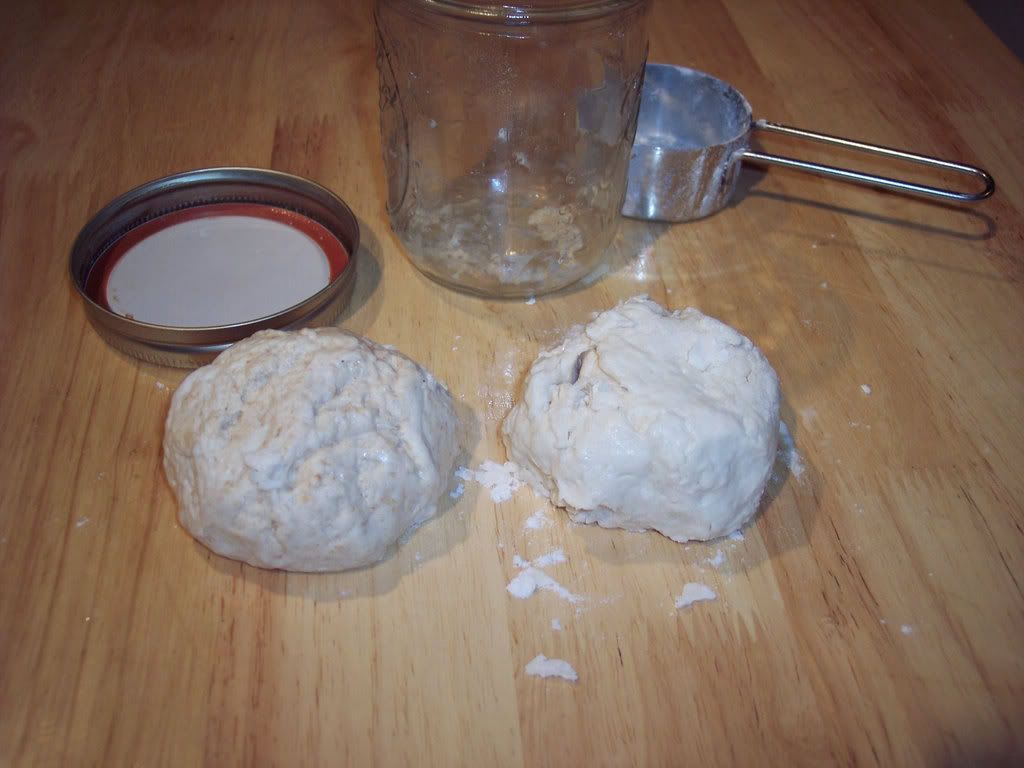
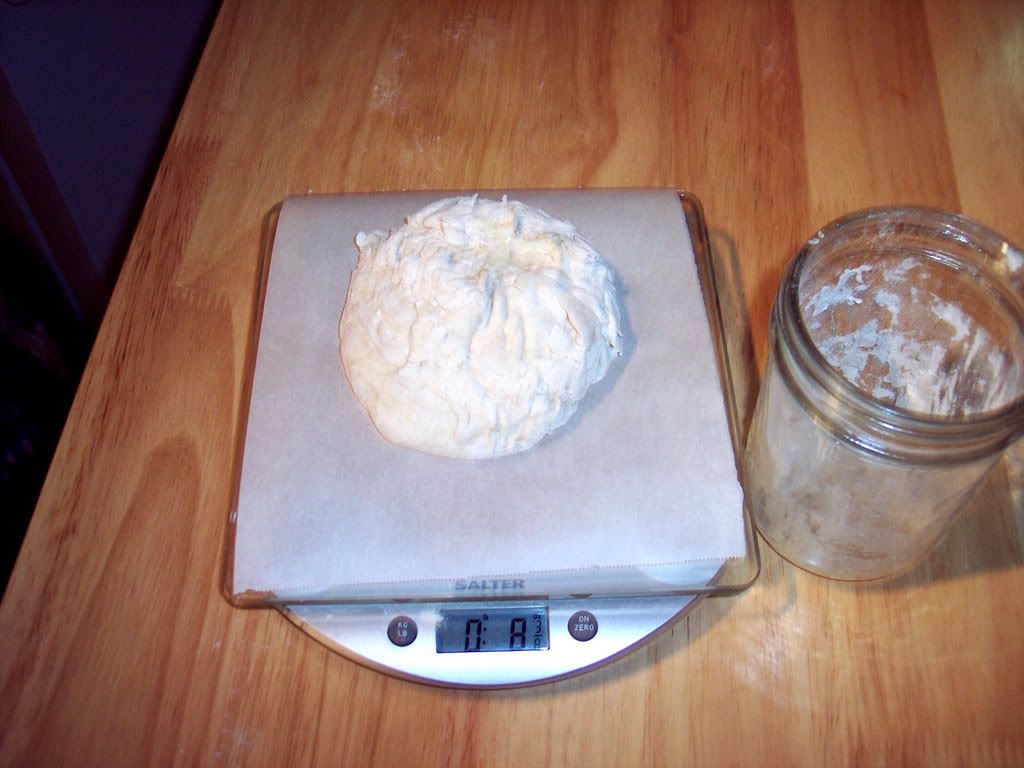
This is what the starter culture looks like straight out of the refrigerator.  How it became this little dough ball is another story that tends to complicate the story about a loaf of bread, so let this be the starting point.  This is going to take a few days so best to keep a vague plan in mind, although there's a wide margin for variation, once started it's best to keep a general schedule since yeast cultures work best with some regularity, wouldn't want to rush the feedings, nor neglect them.  

It weighs about 6 1/4 oz.


Wednesday 10:40 p.m.  Evening.  Bubbles appeared and the mass has grown.  That's a good sign that the culture is already quite active.  There'll be no limping start.  This isn't always true for a culture that has languished in hibernation for long.  
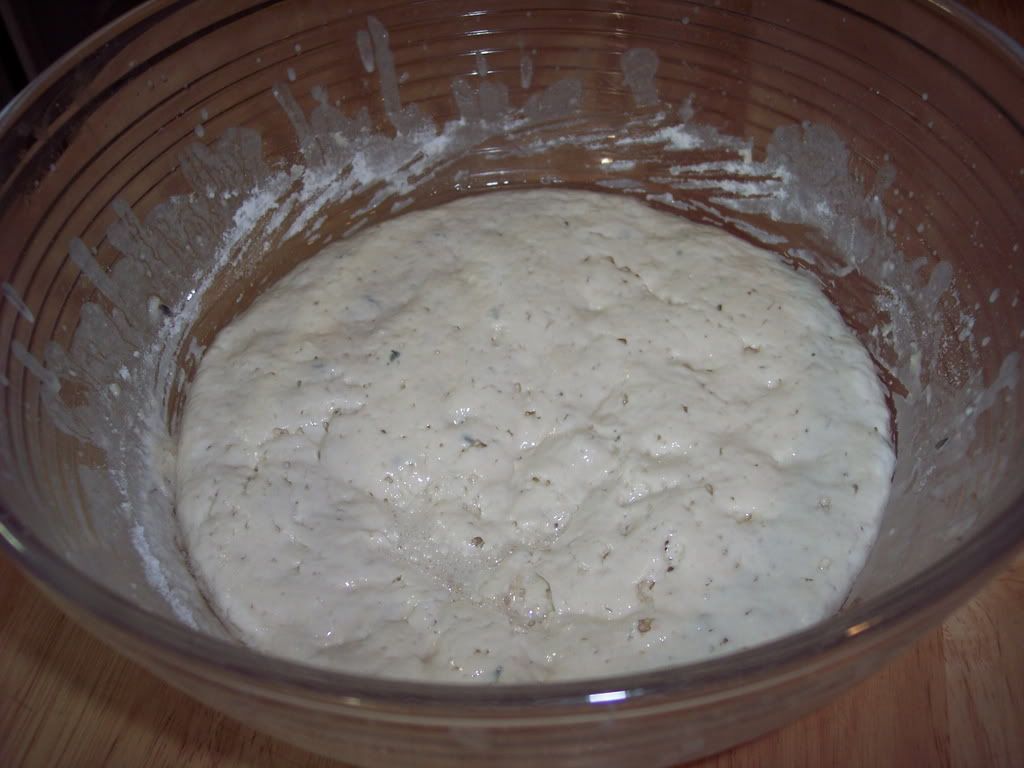

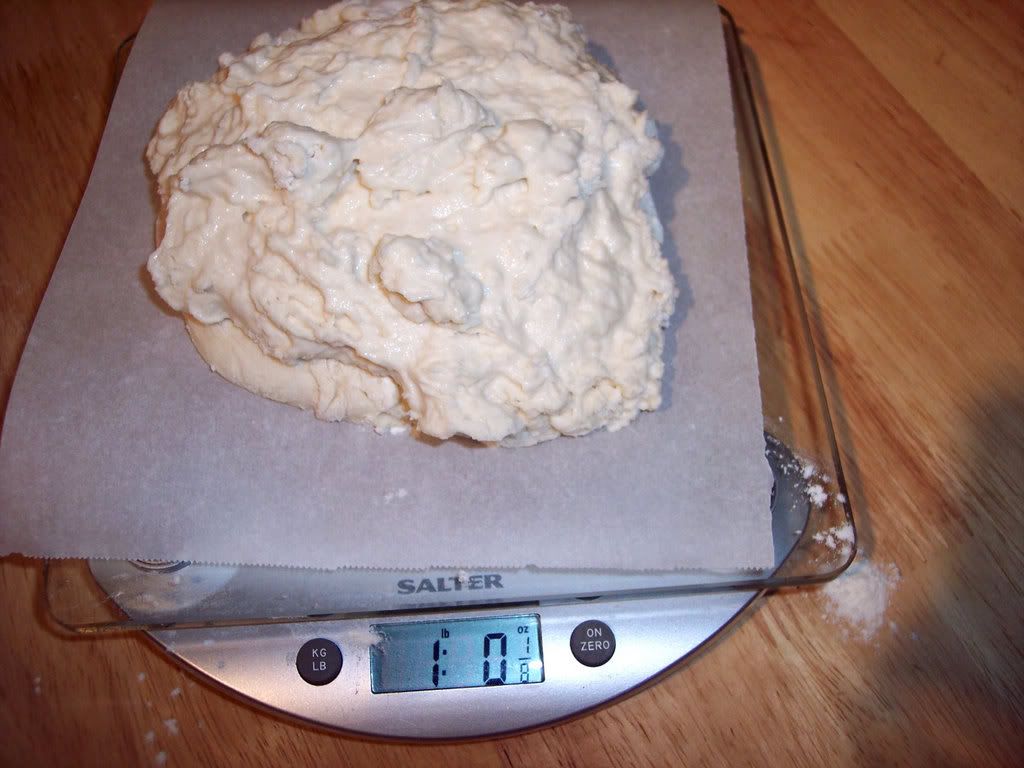
Fed 1 Cup water and 2 Cups flour 10:40 p.m. Wednesday Evening, formed into lose dough ball.  9 hours 25 minutes has elapsed since this bread was started.  
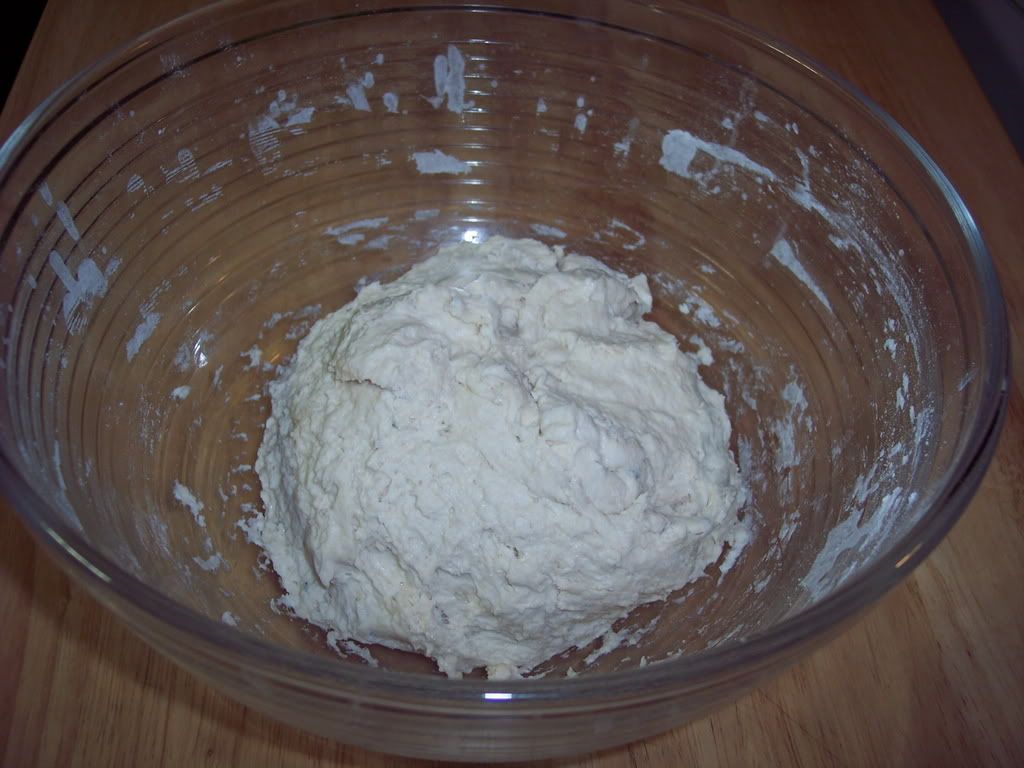

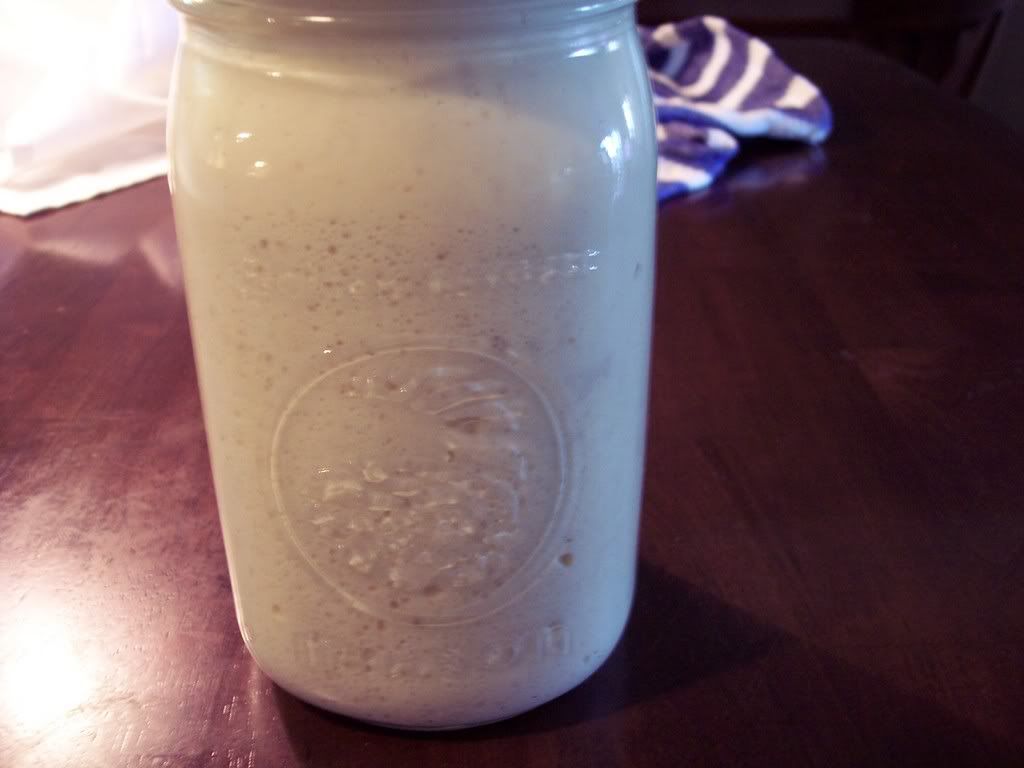
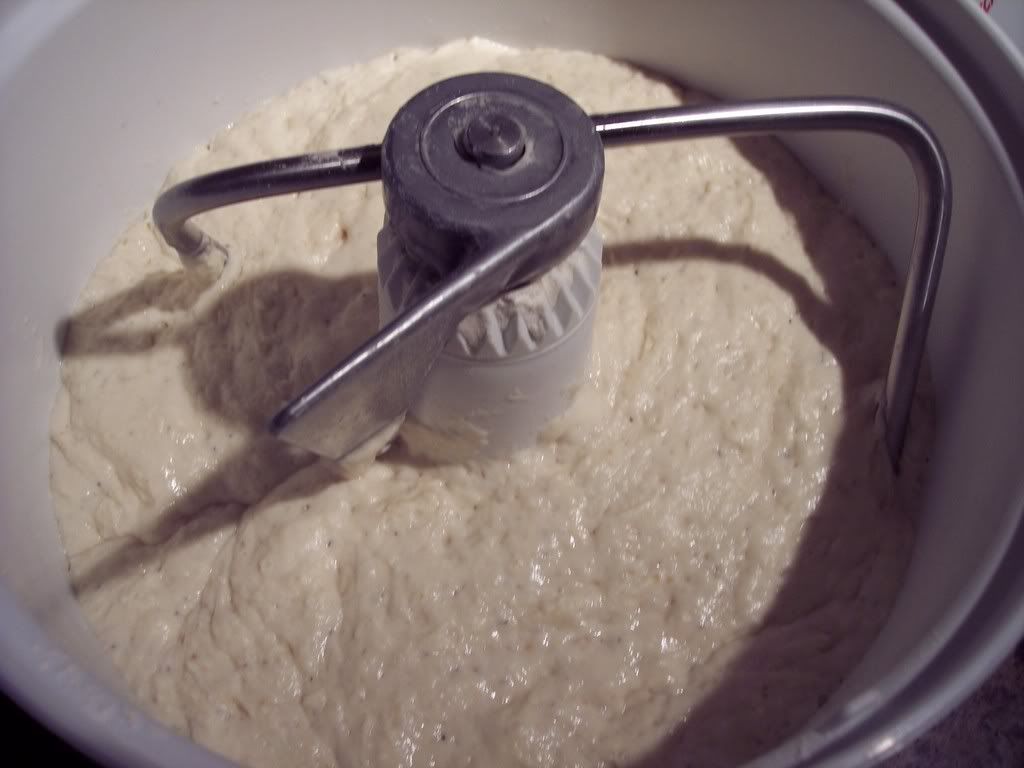
Thursday 8:40 am, the next morning. This is what the risen dough looks like.  It's not particularly impressive.
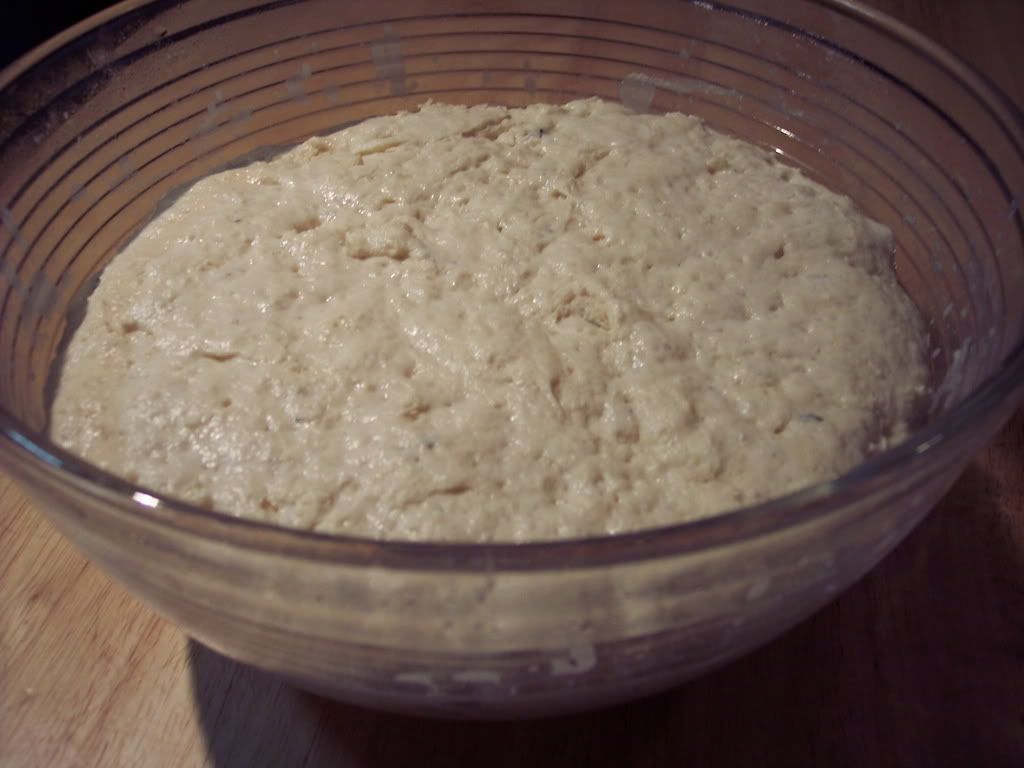

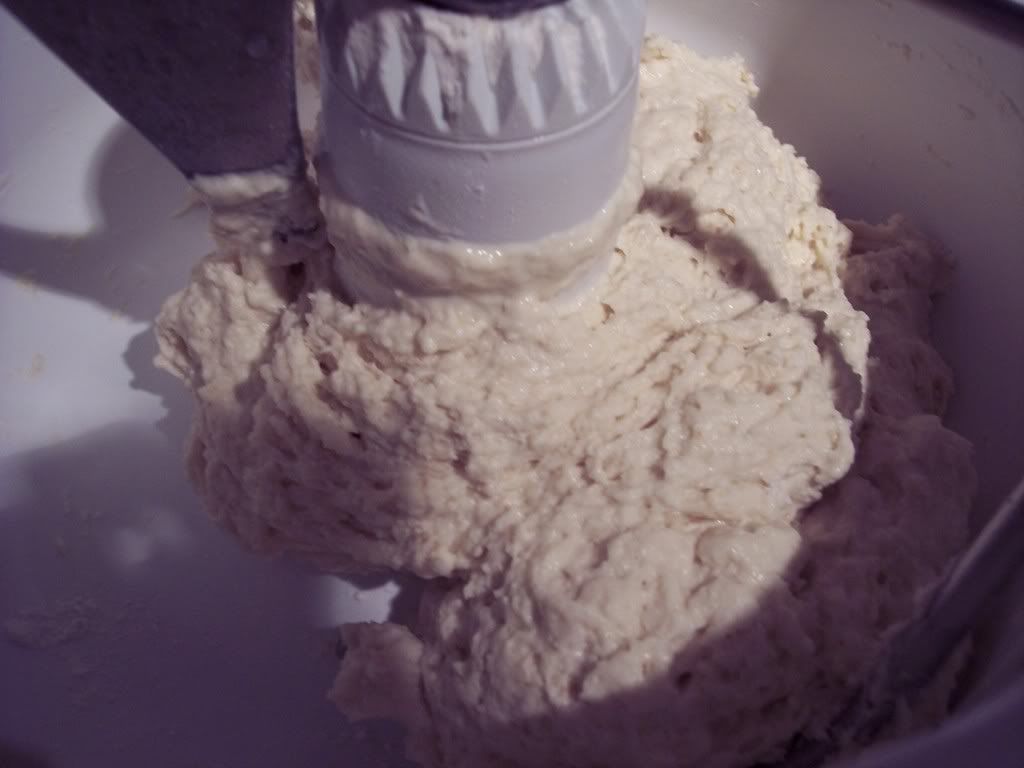
The inflated dough picture above was knocked back, at that time, The next morning Thursday morning at  8:40 a.m. and  fed 2 Cups water and 5 Cups flour. It has been 10 hours from the last feeding and 19 hours, 25 minutes from the starting time. 


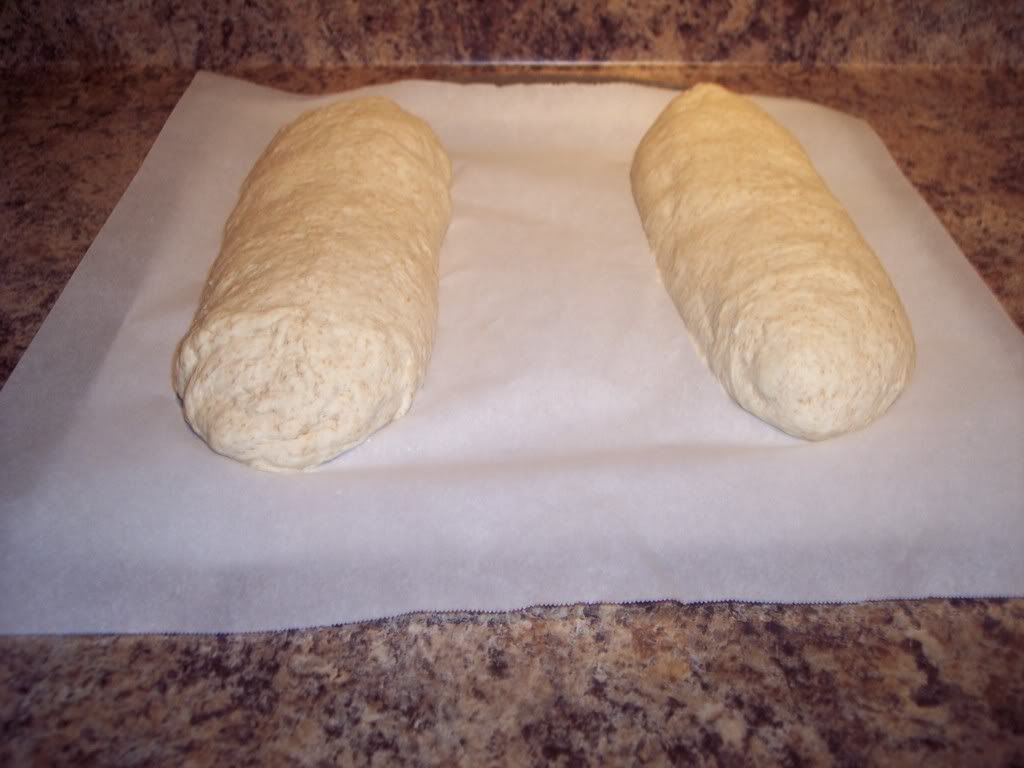
The dough was lightly kneaded after allowing 20 minutes for autolysis, then formed into loaves and chilled for a cold proofing period intended to be at least one day, possibly more.  So after all the excitement of building up a live culture, we suddenly arrest the yeast activity.  This gives the bacterial portion of the culture time to catch up and develop an acid tang along with depth of flavor and texture.   A portion was reserved as starter for the next batch.  The reserved starter portion is flour and water only, it contains no lecithin, flax oil, olive oil, additional wheat germ, nor any salt. 
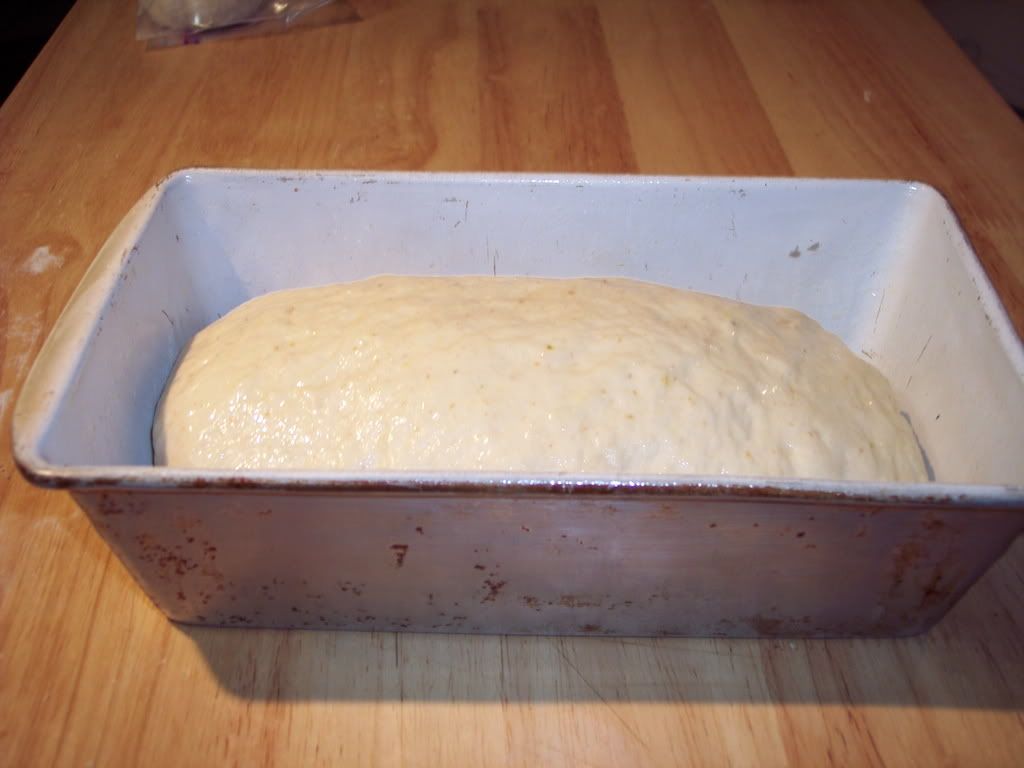


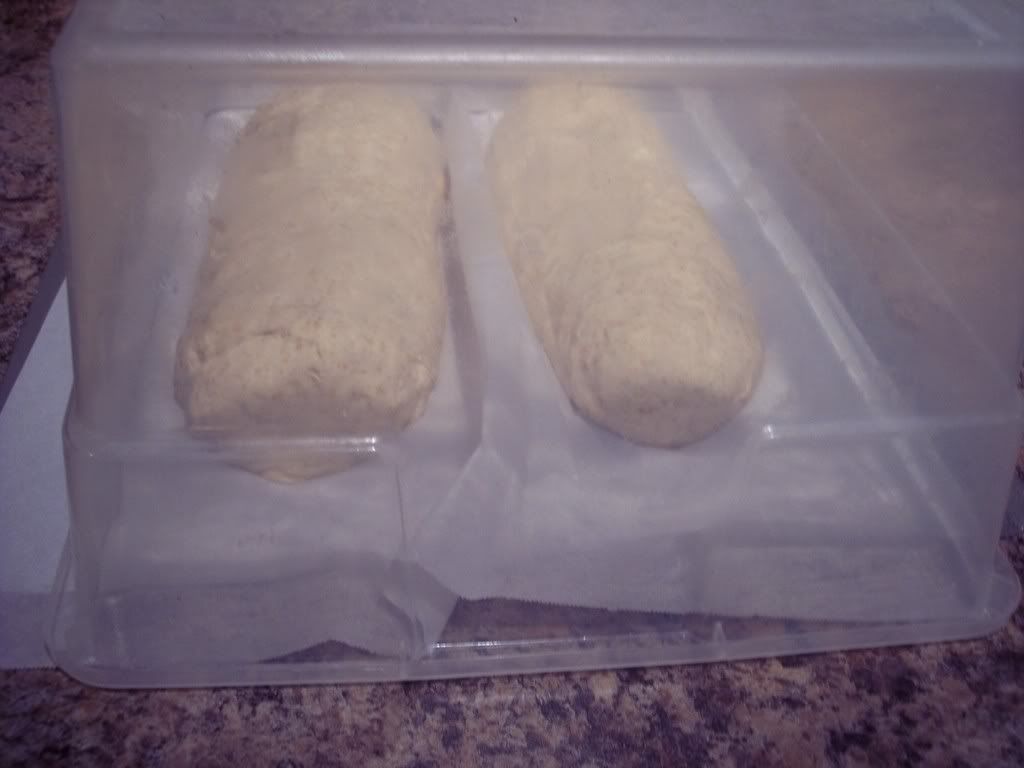
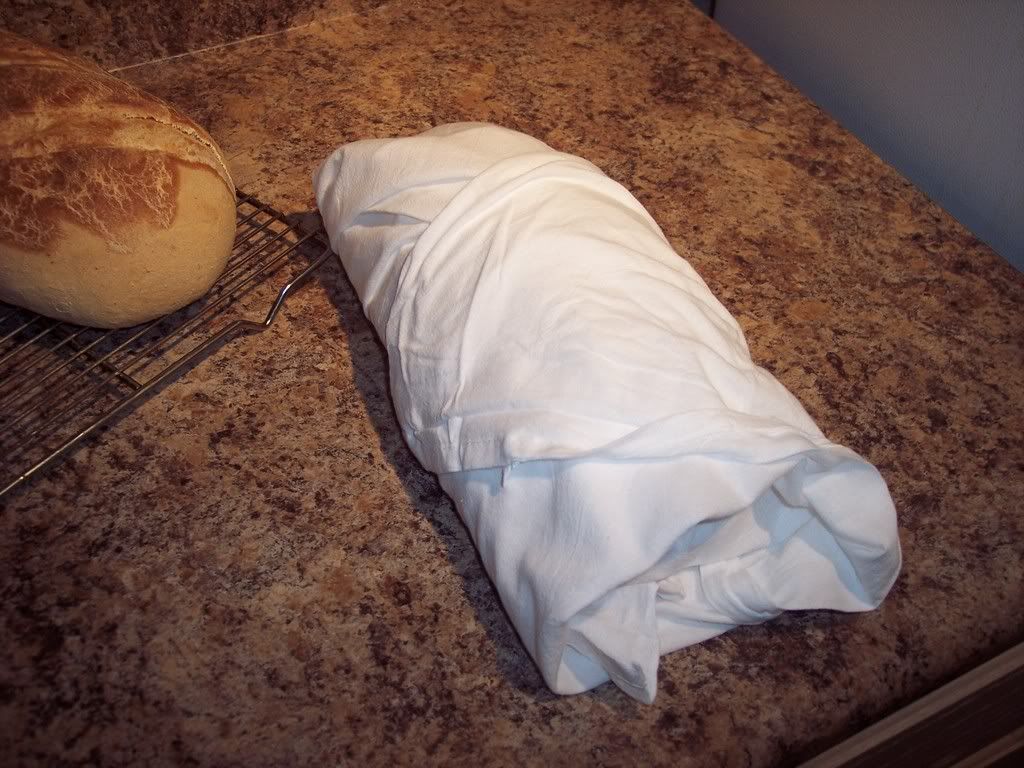
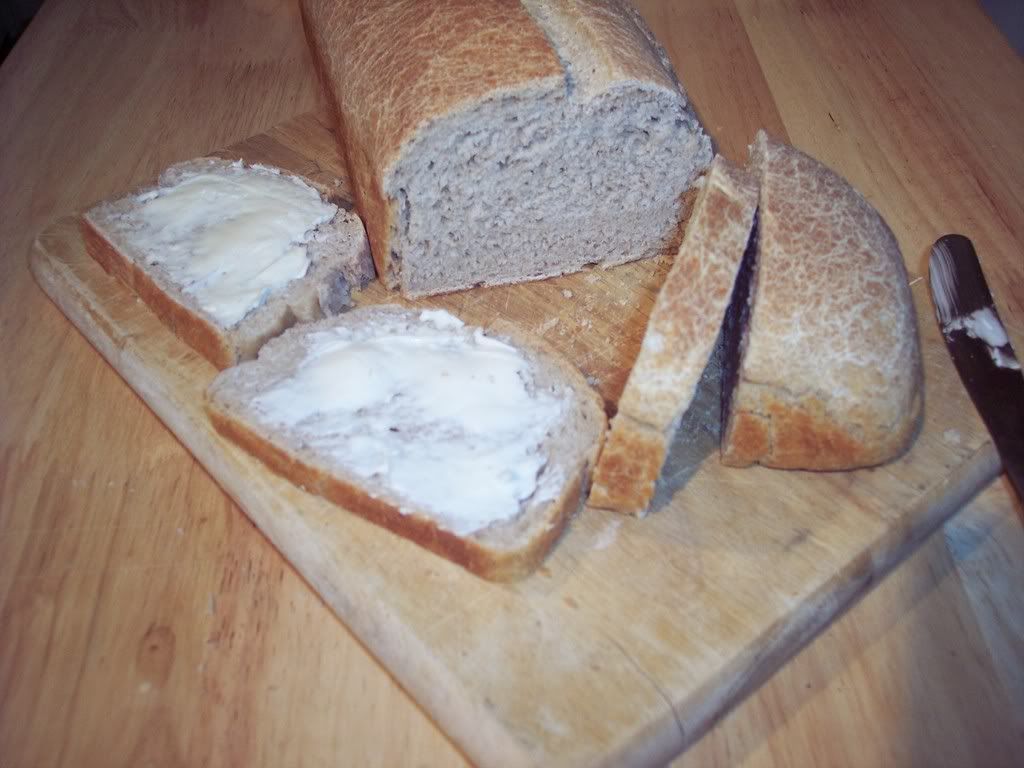
After two days in the refrigerator and four hours in a proof box on the counter.  Removed Saturday at 12:00 noon.  Can't be arsked to calculate the hours.  It's been a long time.  I could have protected them better while they cold proofed and provided moisture after their hibernation and warmed proofed immediately prior to baking, but I forgot. Plus I was being interrupted and somewhat hassled by outside forces that tended to throw me off my game.  So there's that.  You can see the rolls didn't slice all that well.  
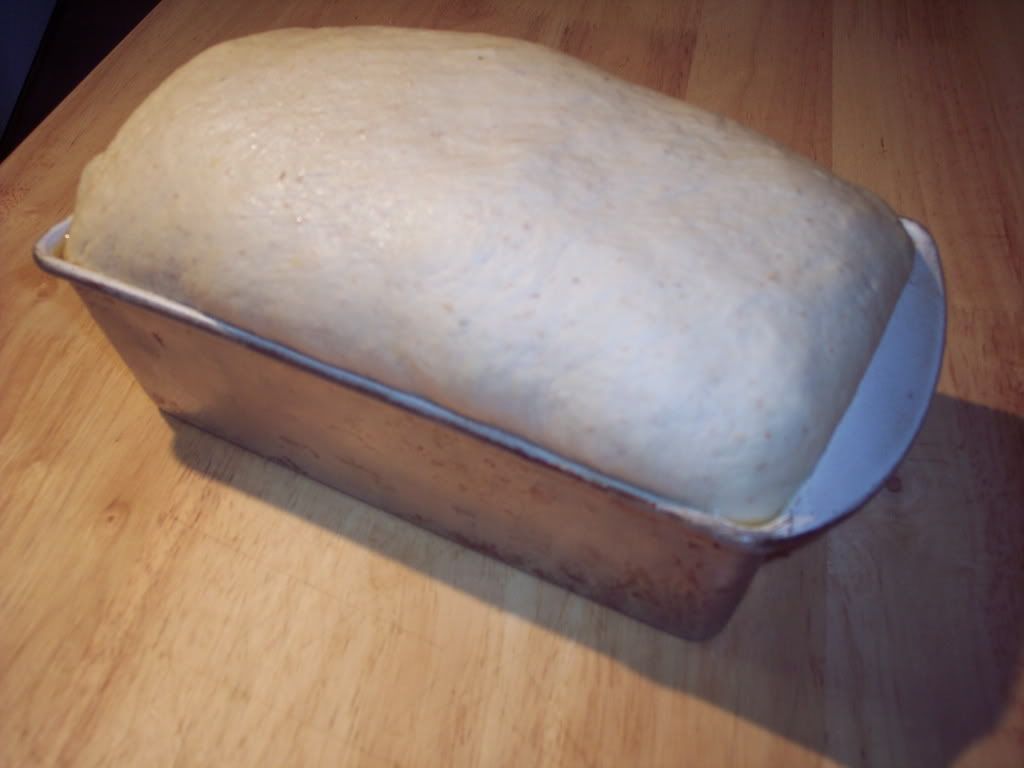
Baked at 500℉ for 45 minutes

Baked at 500℉ for 25 minutes.

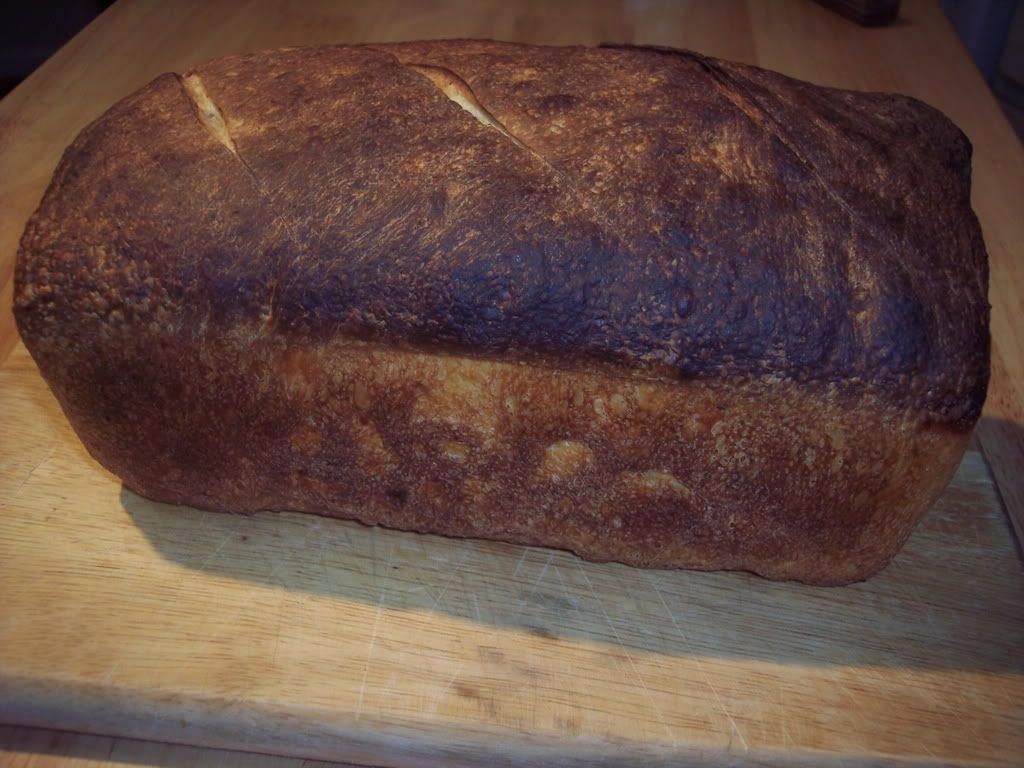
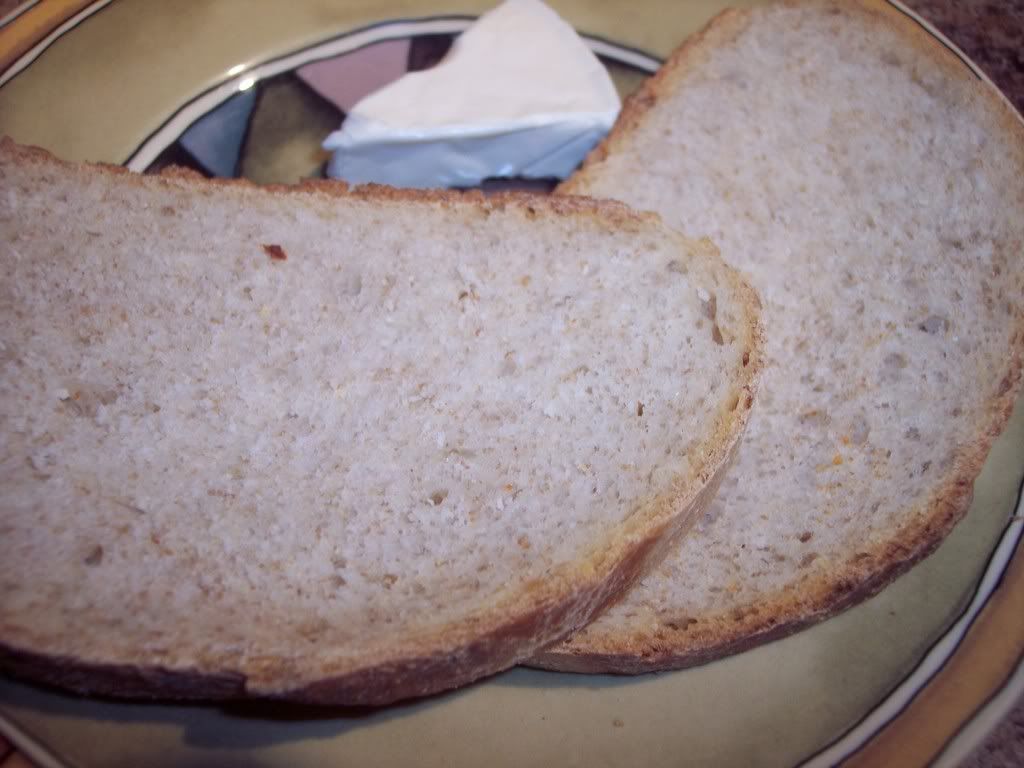
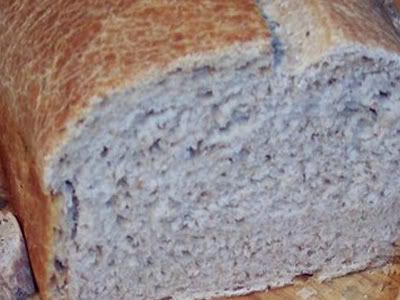
This bread has an intriguing mild tang and classic toothsome naturally proofed texture with irregular air holes.  


Saturday, May 3, 2008

Sourdough sandwich


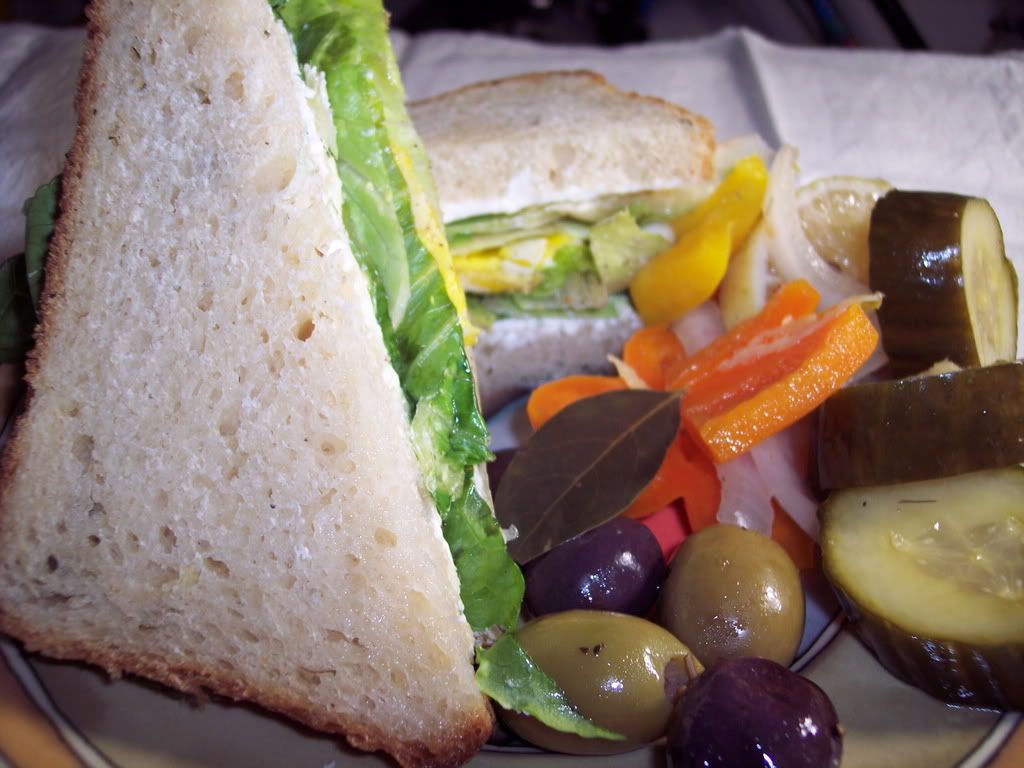
Sourdough bread. Yeast culture cultivated from the grain out of the bins at Whole Foods. And, boy, is it ever good. Check out the crumb on that stuff. Nice and open, just like the pros. Click on it and LOOK I said! I aimed it so you could see. Plus cream cheese. Home-made pickled vegetables. Imported olives (variety). One of those olives had two seeds in it !!!! Which hast to be a first in history.

Monday, April 28, 2008

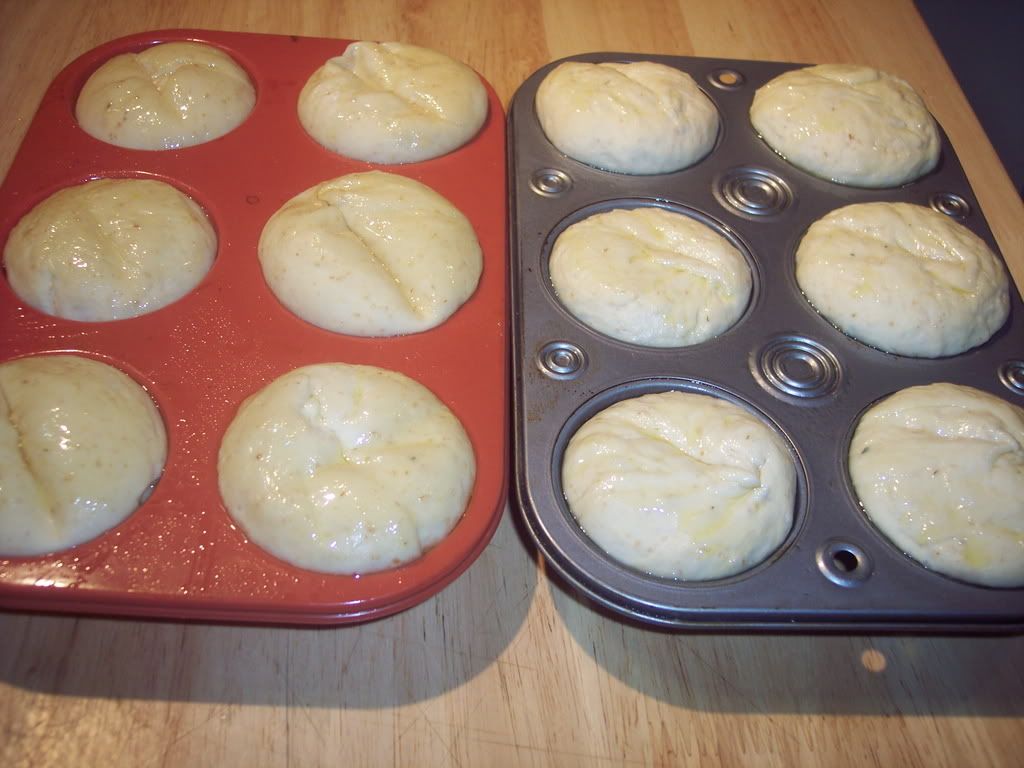
sourdough muffins


Made from sourdough yeast culture that was cultivated from the grain scooped from the bins at Whole Foods, so its origin is unknown. The culture was revived, proofed, then baked. It was dough left over from a batch made for a loaf that continued to proof in the refrigerator to further develop complex sourdough flavors. This portion of the dough that lacked the longer retarding proof hasn't even the slightest sourdough tang, still far more interesting than plain white bread made from commercial yeast. They're extremely light with a very thin crispy crust. They're a bit addictive.

Tuesday, November 20, 2007

sourdough bread Volunteer

Can you believe this?

[anecdote] I've been using this bread for a week and enjoying every second of it. I'm nearly out, and that will not do. I currently have some four or so starters that need attention but I'm enjoying this culture that hitch-hiked on the Whole Food's grain so much right now that I want to encourage it instead. The others will just have chill awhile longer, Thanksgiving is a few days off and I can't have a bunch of jars bubbling about demanding feedings. Plus there's already one experiment involving yeast running on the patio. [/anecdote]

This is how it happens:

The starter. Getting started.


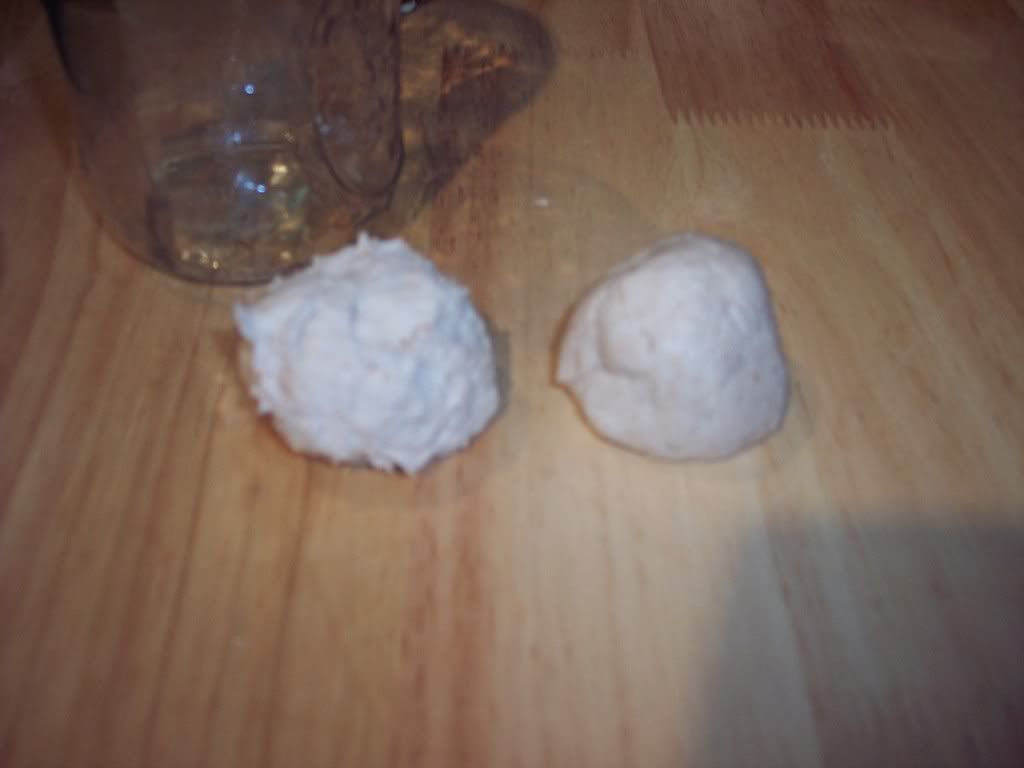
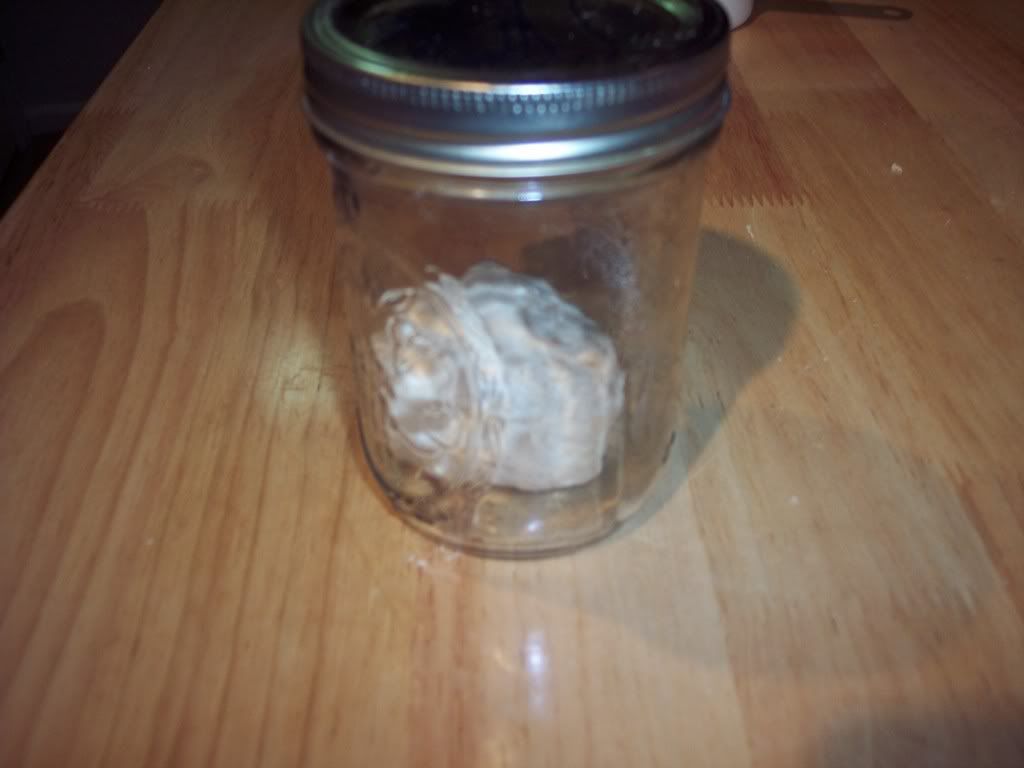
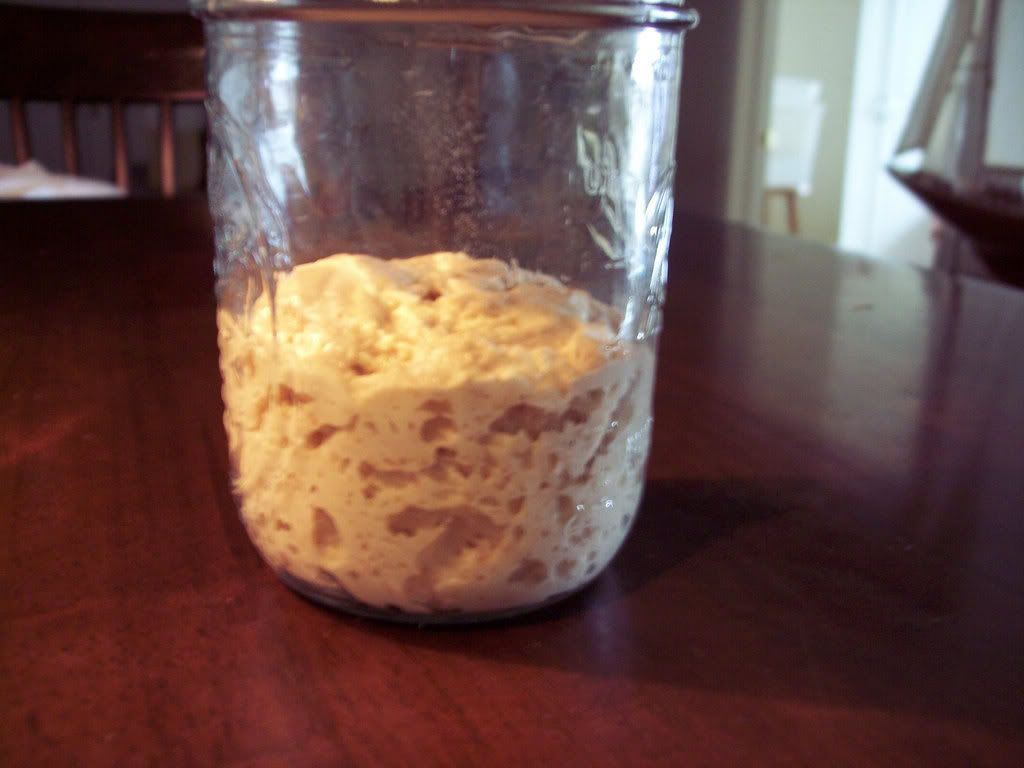
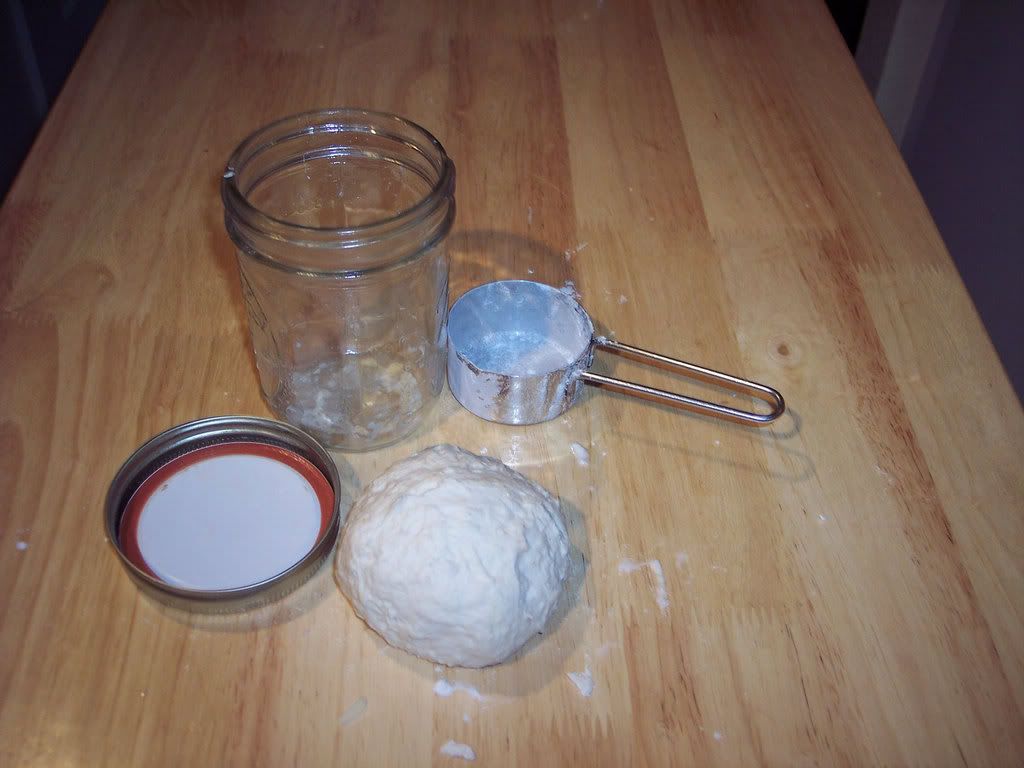
A little ball of sourdough comes out of the refrigerator and meets up with ball of fresh dough of about equal size. They join and go into a jar. They wait, or proof, or rise, or ferment, or do whatever it is yeast and bacteria does when left alone for 8 hours. In this case longer, 10 hours, irresponsible as ever 13 hours later it puffed up into that down there ↓.


doubled ↑ united with twin ↑ back into jar ↑

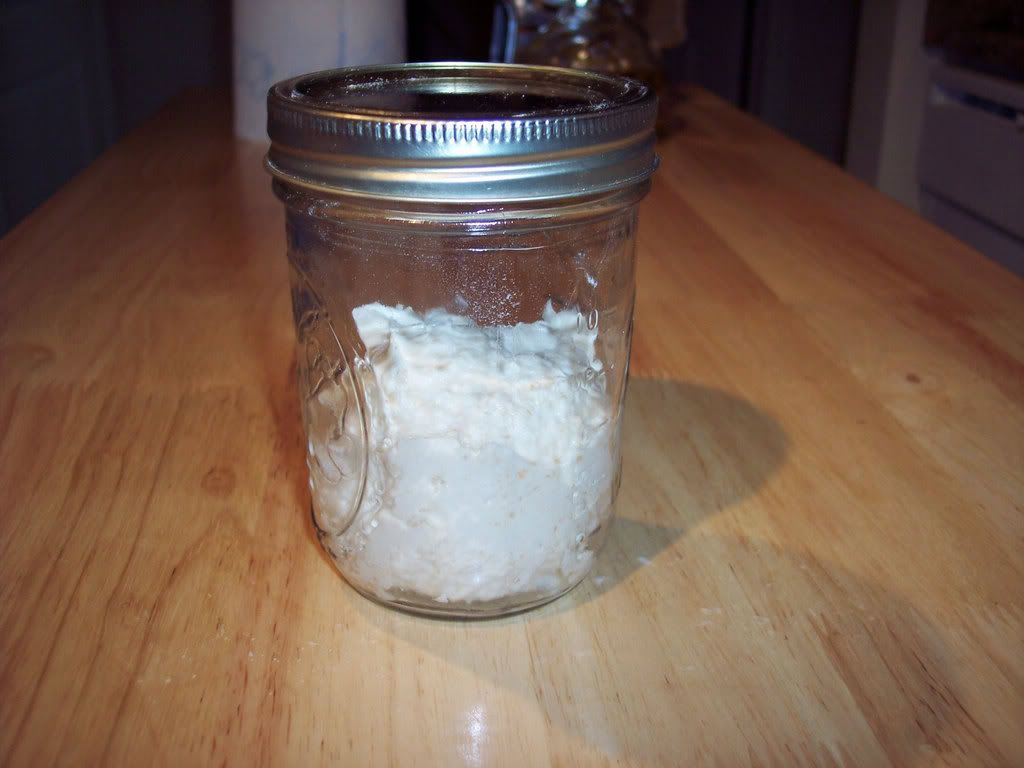
8 hours the ball puffed up into this ↓.

weighs 8oz↓ fed weighs 16oz↓ bigger jar ↓

after 6 hours
fed and new container ↓

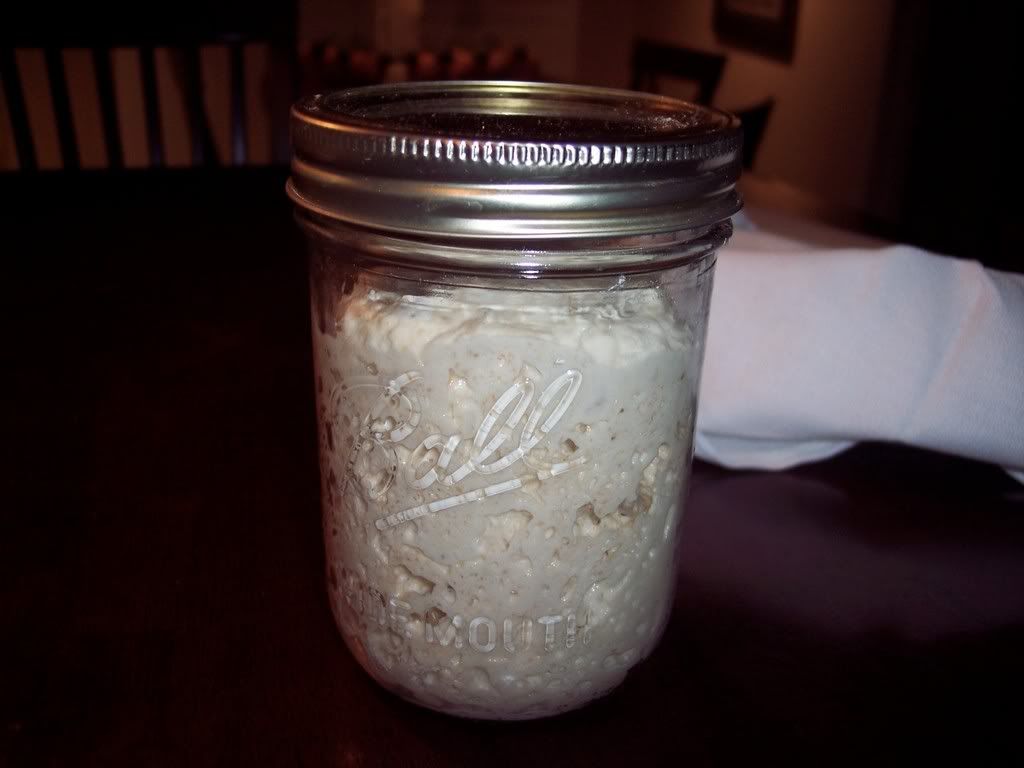
10 hours later ↓ fed and chilled. This is a bad hour to form loaves. Will wait until I'm ready to come around to this, will feed slightly more and bring back to room temperature, if not slightly warmer. This aging will also help the bacteria portion of the culture catch up with the yeast portion which is at the height of its activity.

Chilled. Next day appeared not much different. Fed slightly. Reserved golf ball size piece of dough to maintain culture. Added flax seed oil, one egg, salt, kneeded within inches of its life, formed loaves.


pictured twice because it's so beautiful


give to someone


Tuesday, November 13, 2007

sourdough starter Volunteer

The amazing hitch-hiking sourdough starter


The organisms making up the yeast culture were on the grain that was milled for this bread. Its story as a sourdough starter is told at length here (as the uninoculated control culture, the ignored other jar) and as a proper bread dough here

The place where the grain was grown is unknown, presumably Nebraska, but wherever it was, its yeast culture tastes fantastic. I will keep it and call it Volunteer.