Showing posts with label scone. Show all posts

Tuesday, April 5, 2011

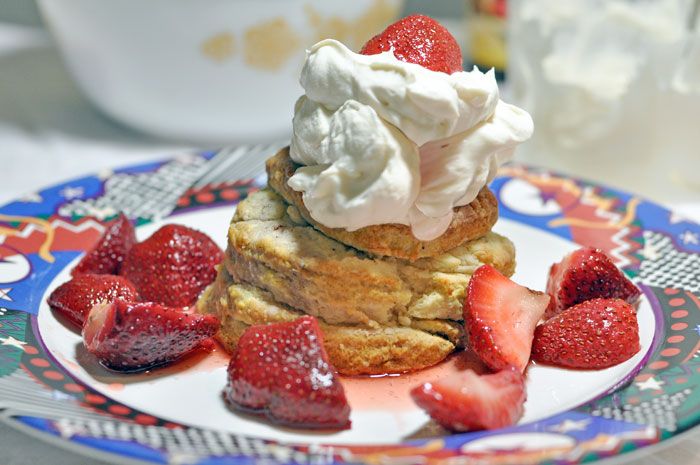
scone, strawberries


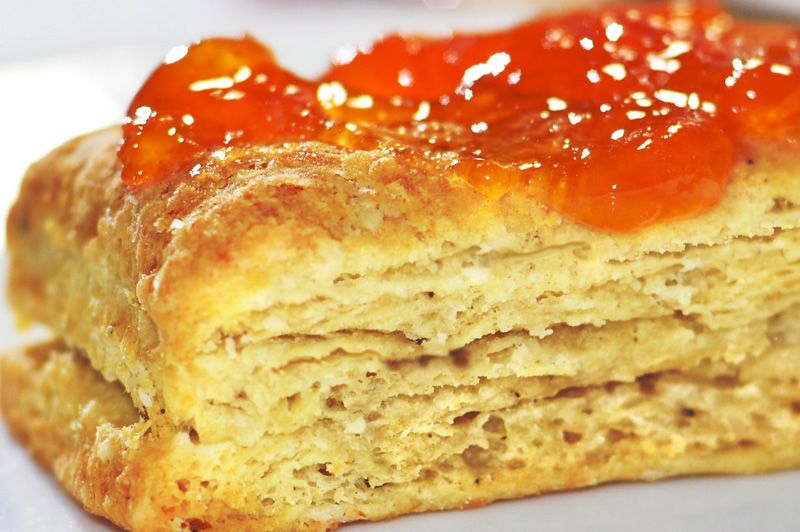
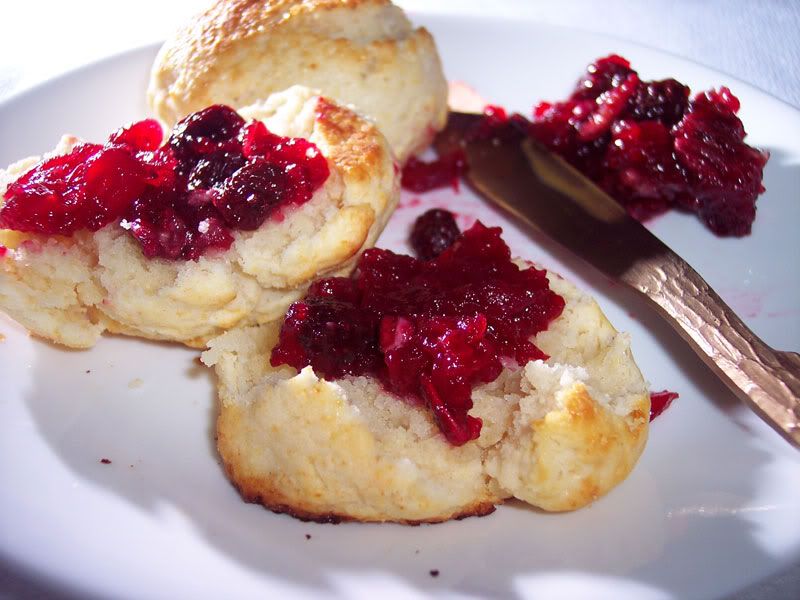
I have got my scone act down. This is the lightest tastiest scone I've ever had, nay the lightest tastiest in history!

For one scone, but honestly, who ever does that? There is a little bit of waste doing it this way, but that's okay. I'll tell you what was done and you can adjust to your heart's contentment. 

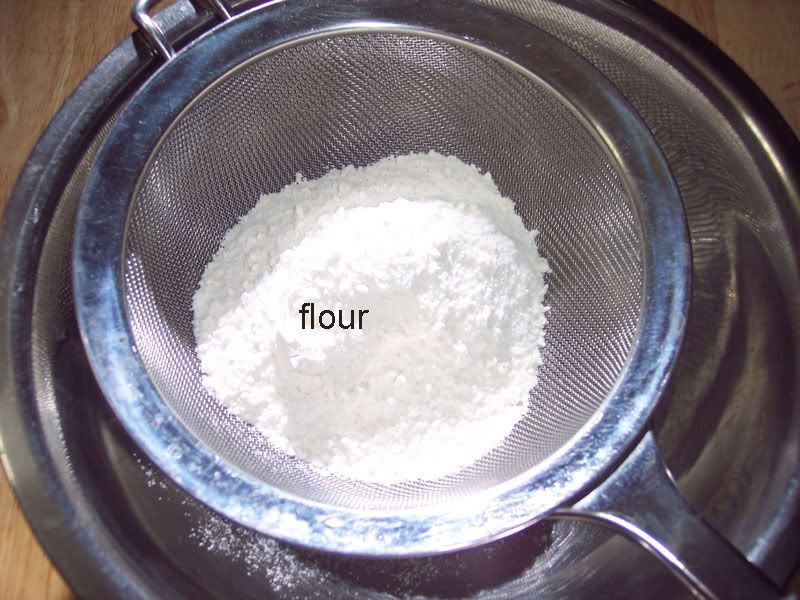
Scone dry ingredients. These are whisked in a bowl sitting in ice water in the sink. This is the first time I ever did that, but the bowl was warm and I wanted to chill it so that the fat wouldn't melt. Whisking takes the place of sifting. 

*  1/2 + 1/5 approximate cups flour. I was using a half cup measurer. So one scoop + one partial scoop. I noted that the largest biscuit cutter is about the same size as the tin measuring half cup. I needed a little more for the edges which will be wasted.
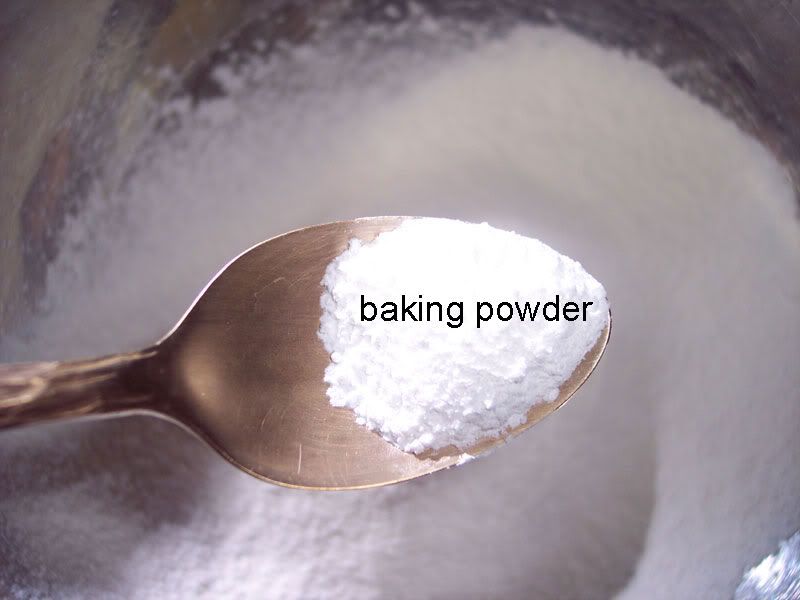
*  1 level teaspoon baking powder. This is a lot for that amount of flour
*  1 level teaspoon baking soda (bicarbonate of soda) This is twice the amount that is already a lot for this amount of flour. So you can see we're courting disaster. 
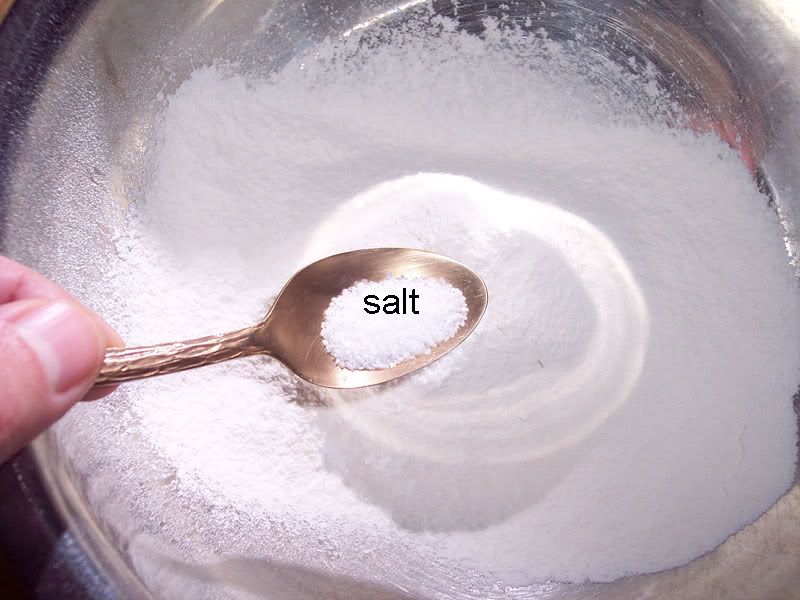
*  salt and pepper. Yes, pepper. I don't know why, but it actually does go well with strawberries.
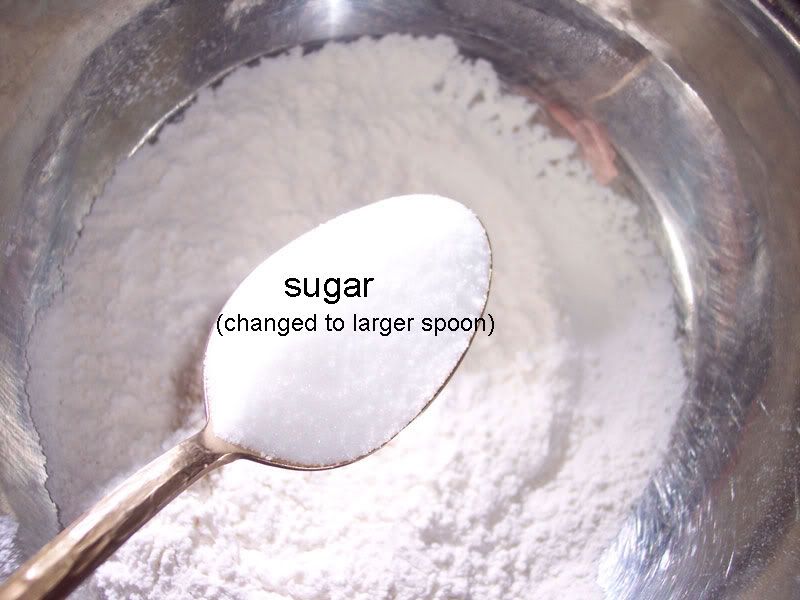
*  1 tablespoon sugar
This is a triple leaven attack. The baking soda with vinegar reacts immediately. The double action baking powder is activated by heat. You should know that baking powder is baking soda with two different types of acid (along with corn starch to keep it all separated). So essentially, this is two level teaspoons bicarbonate of soda with three types of acid to react at different heat levels. For this reason, the dough is handled quickly once the liquid is added so that the first reaction is not lost to handling, and the scone is placed in a super heated oven to shock the dough into reaction, and to compensate for the heat lost due to the oven door being opened. The heat is cut back immediately so that the scone doesn't burn before the interior is cooked. These are the techniques that win me the admiration of my peers. No brag, just fact. 
Fat ingredients.
*  1 large rounded tablespoon unsalted butter
*  1 large rounded tablespoon Crisco (hard vegetable fat) 

The fat is smashed and rubbed into the flour being quick about getting the fat off the fingers. The aim is to keep it hard. The flour should be saturated with fat. 

wet ingredients.

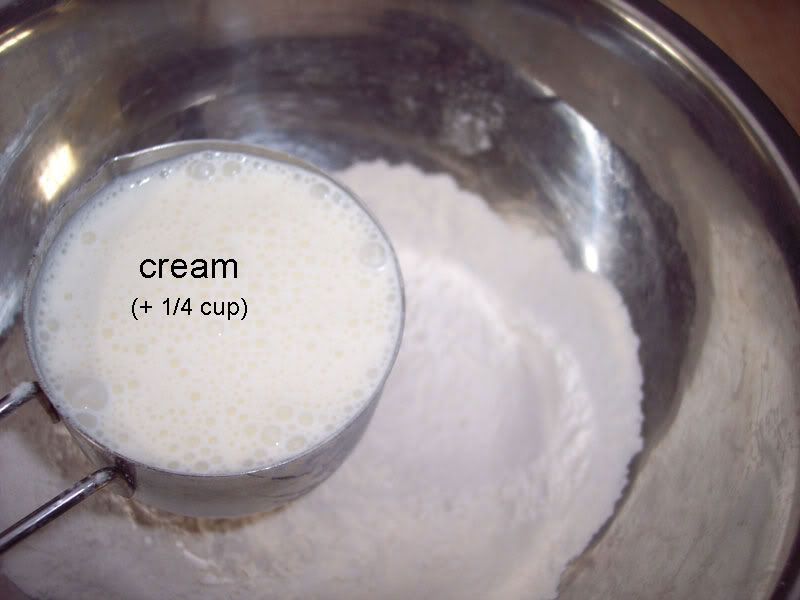
*  1/4 cup milk
*  1 teaspoon cider vinegar, to activate the baking soda and to bring into balance the pH of the mixture so that the baking powder will activate

I like to stir with a knife. Stir while pouring. Use just enough liquid to bring the fat-saturated flour together. 

Turn onto a flour dusted work surface. Flatten with hands or rolling pin or a pan. Fold in third. If the mass is dry, then dampen the layers with water or milk or whatever so that they adhere. Cut the stack of three in half and stack one on top of the other. Now there are six layers. Dust the biscuit cutter and cut straight down. If the layers are pinched, then the layers will have difficulty lifting upward and they will tend to expand outward instead, so a clean cut with the biscuit cutter is essential. If no biscuit cutter is available then use a sharp knife and cut straight down.

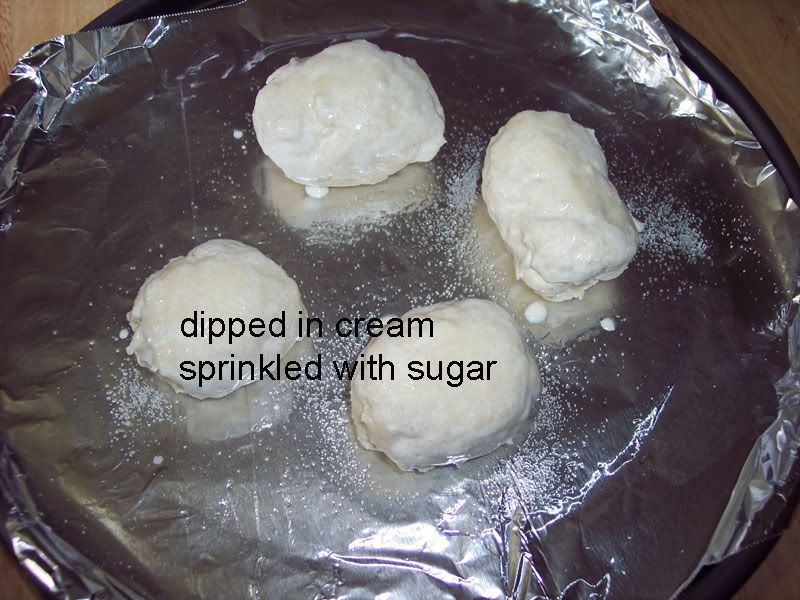
Get the scone(s) onto a sprayed tray and into a HOT 450℉/230℃ oven immediately. Cut the heat to 375℉/190℃ bake for 10 minutes. (This was 9 minutes)

Now, you may think it strange to make scones with pepper and apple cider vinegar, but all I can say is this scone was awesome. It might even be improved with powdered ginger, cinnamon, allspice, or cardamon or balsamic instead of apple cider vinegar. Go on then, bake adventurously. 

Friday, December 17, 2010

scone


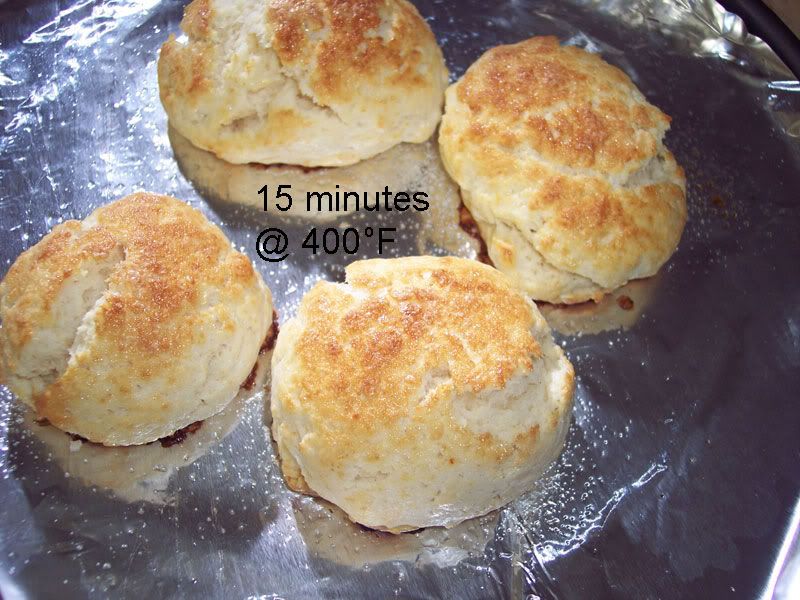
From the biscuits down there  in the previous post.  

Thursday, December 4, 2008

scones


OK, now that's over with, something entirely different.

Scone VS. Biscuit

What exactly is the difference between scones and biscuits, and by biscuit, I mean biscuit in the American sense and not biscuit in the British sense, which is a cookie, even though the question asks about scones, which is primarily Scottish and which differs slightly from a British scone. Got that?

There is no exact difference. In fact, there's more similarities than differences.

Here are the differences:

* Scones frequently include both an egg and milk (or cream), biscuits do not contain an egg but usually contain buttermilk.

* Scones are often sweeter and richer, although biscuits can also be sweet and scones can be savory. Although, nowadays, you often get biscuits with bacon or bacon fat, possibly ham, mixed right in.

* Scones tend to use a bit more liquid than regular biscuits and so generally result in a more cake-like consistency.

* Scones are often cut into triangles, biscuits are usually round

* Biscuits are often associated with the southern United States, scones with Scotland.

* The Scottish scone is typically made with oats.

* Biscuits are served as a side dish with breakfast or dinner, while scones are more likely to be served with tea, for brunch or as a base for a dessert sauce

* Scones is pronounced sk-on in Scotland and by 1/3 of Britons, and pronounced sk-own by the rest of the rubes wot got no class.

* Biscuits usually contain fat in the form of butter, vegetable oil, or lard.

* Biscuits more often use baking soda (using the acid in buttermilk to activate it), although not necessarily, and scones are not precluded from using baking soda (along with an acid)

So, to summarize, the differences have been fudged like mad, both are quick breads that use a chemical leavening agent, and given the degree of stretch of definitions for both scone and for biscuit, and due to the amount of overlap between those stretches of definition, there's not all that much difference at all. However, a roll, which is leavened with yeast, well, now that's a whole 'nuther animal.

Thursday, August 28, 2008

scones


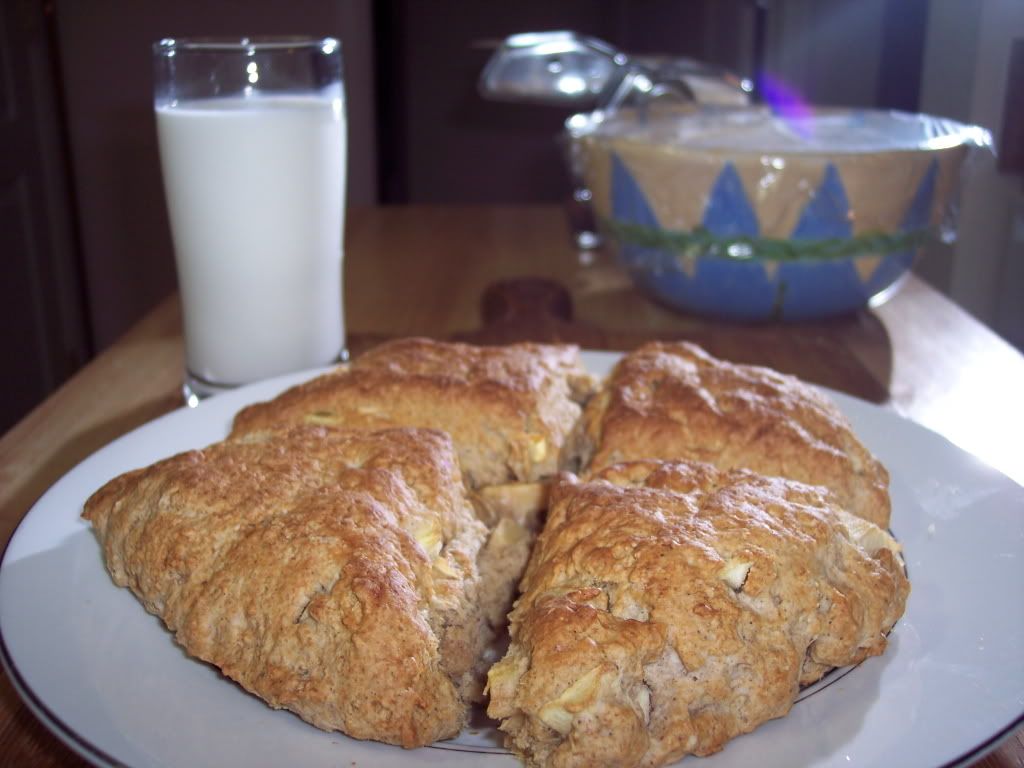
Got a wild hair up my bum about making scones during the DNC national convention and got up and started throwing things into a bowl. Karen put the idea in my head earlier today. These are made the same way as biscuits or a pie crust. Flour into a bowl, rub in butter until the texture changes satisfactorily, add baking powder and baking soda for double rising action. Include an acid, preferably citric, to activate the soda, be sure to remember salt because flour is just blah without it. Then add whatever your precious little heart desires, or whatever you're in the mood for, or whatever you happen to have on hand, or whatever is nearest, or what ever your favorite pet demands. OK, maybe not that last one.

I have no idea what amounts I used because I didn't measure a single thing. Just added what seemed reasonable. The baking temperature was arbitrary but high, the length was sheer guesswork but reasonable. Relied on my nose to confirm doneness. They probably could have gone for a few more minutes. I happened to have an apple just sitting there. Cinnamon, allspice, and nutmeg go with apple. A half of a lime was within easy reach. My microwave has convection capability, so I set it at its highest which is 400℉ for 22 minutes.

I'm guessing here:

1 + ½ C flour mixed AP and Whole wheat
4 oz butter cut in
1 + ½ teaspoon baking powder
1 teaspoon baking soda
½ teaspoon salt

Mixy mix mix

⅓ teaspoon almond extract
1 teaspoon vanilla extract
½ cup milk

Mixy mix mix

Press into dough ball careful to stop working and stop adding milk as soon flour is moistened, squeeze into coherent ball,

Coherent. Ha ha ha ha . That means it makes sense.

Flatten out into a square. Cut diagonally. Separate wedges, place on Pam sprayed piece of tinfoil. Bake.