Usually when I make dough I first decide how much water or liquid I want by volume not by weight, then I calculate the weight anyway and hold it in mind merely for reference. Then I add the volume of flour that roughly corresponds with that weight keeping in mind that there must always be room for fungibility.
Fungibility. That's a funny word.
Recipes for bread crack me up. They always specify precisely weight, volume, or bakers percentage and then hasten to add, "Have a cup of flour sifted and ready in order to make adjustments if necessary." So which is it, precision or a broad margin for adjustments, even so much as a cup? I don't see how one can presume to have it both ways.
This dough was done backwards from usual because I wanted to use the Cuisinart processor to sift the flour. That means the flour is in the working bowl first along with dry yeast and salt and then hot water was added through the machine's feed tube. This is completely backasswards, but I don't care. This is the first time I ever used the Cuisinart too make a bread dough, and I must say that it is brilliant. The dough felt al little bit weird, kind of like pate chous. For a minute there I thought the water might have been too hot, that it might have cooked the flour and killed the yeast, but it did come directly from the tap. I tell you though, maybe I should have been more careful because that tap water gets scalding HOT.
It was fine. It didn't kill the yeast or cook the flour.
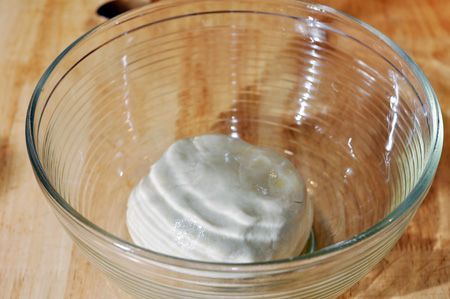
1/4 teaspoon commercial dry active yeast was added to 3 cups A/P flour along with 1 rounded teaspoon sea-salt. 1 + 1/2 cups hot water drizzled in through the feed tube. The dough sat covered on the counter overnight. There is very little yeast there to get started, and a lot of salt relatively to give the yeast cells a hard go at starting, but all that is okay with me because I want this process to be slow as possible. That long slow-to-get-started proof results in a somewhat aged dough, although a really-truly artisan baker would not consider the dough actually aged with anything less than three days or so.
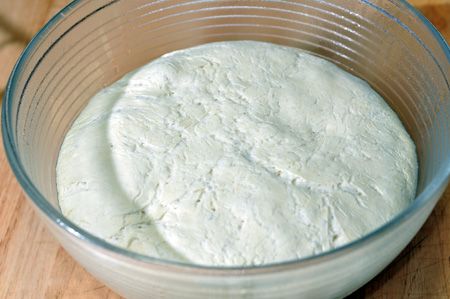
After that, things happen fairly quickly.
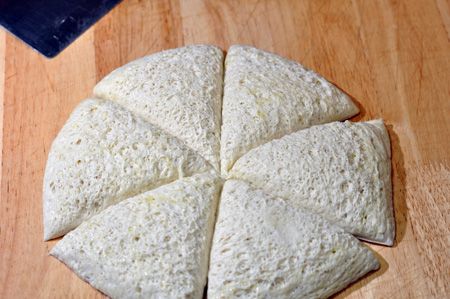
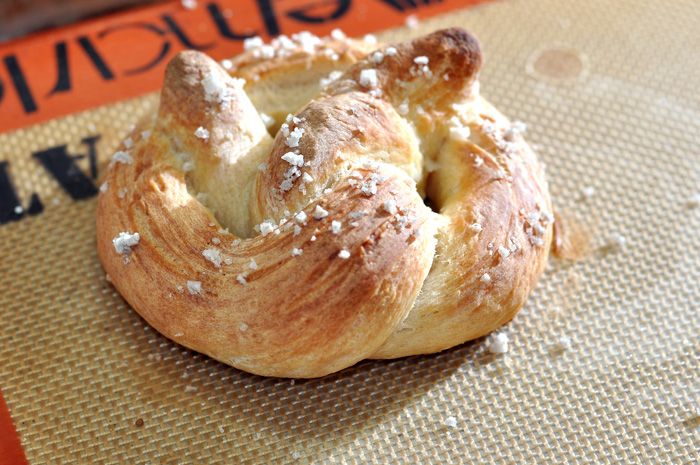
An electronic kitchen scale measured these segments at nearly 5oz which seemed like a bit too much. Their corners were nicked off to get each segment down to a little over 3oz, which seemed more reasonable. Maybe I should have left them at 5oz because the pretzels were not as big as I imagined they would be judging by numerical weight. I wanted big pretzels not medium pretzels. See? I should have stuck with my intuition, but nooOOoo, I had to go by numerical reasonableness.
Plus it made the patchy dough wads comprised of the nicked off dough-corners roll out to goofy unstable pretzels.
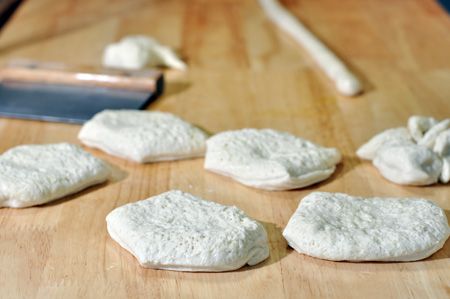

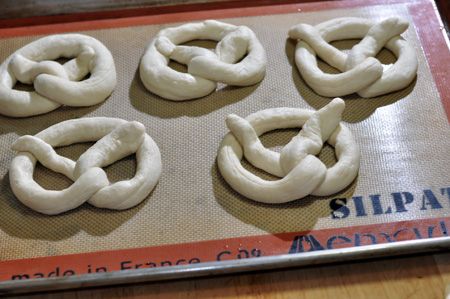
Here comes the fun living-dangerously part. Food grade lye. This stuff is hazardous. Got it through Amazon. I can hardly believe they would sell it to a goofball like me.
Woooohoooo!
Warnings say to wear rubber gloves, goggles, long sleeves, steel-tipped boots, space helmet, oxygen mask, hazmat suit and to use four foot tongs. Possibly not those last six things. The point is, lye is dangerous, even food-grade lye. The thing is, it is far more alkaline than baking soda and it makes extraordinary pretzels. Nothing else like it.
Apparently the method was discovered by accident when a baker dropped a tray of pretzels into a tub of lye solution intended for cleaning up bakery tools. He baked them anyway and the attractive result led to the guy eating them, obviously a world-class idiot because he could not have known that the high baking temperature renders the hydroxide compound harmless. Sheesh.
Doesn't that make you wonder at the number of people who perished through experimentation in the advancement of culinary arts, or perhaps just plain stupidity?
Anyway, this lye stuff sort of scares me.
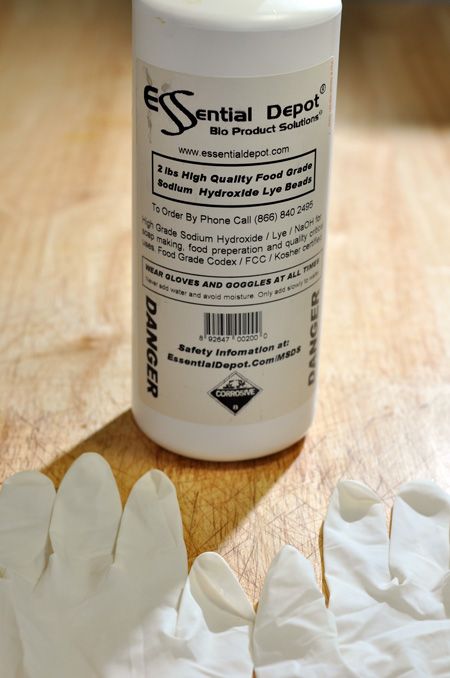
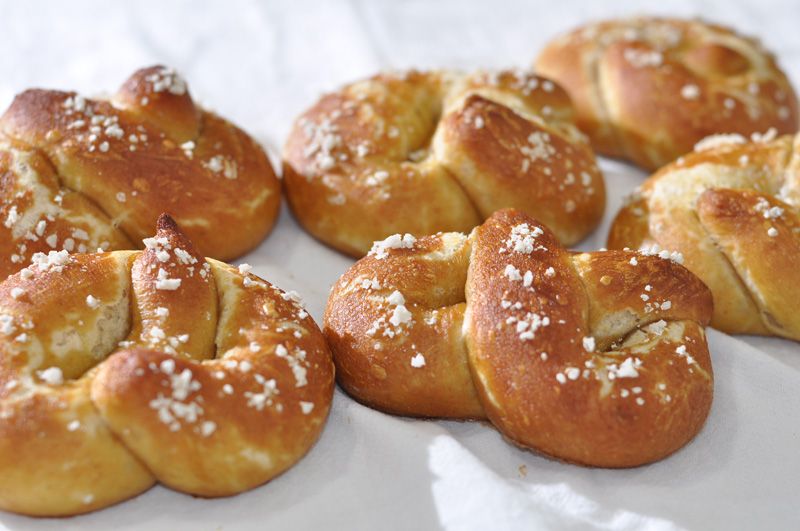
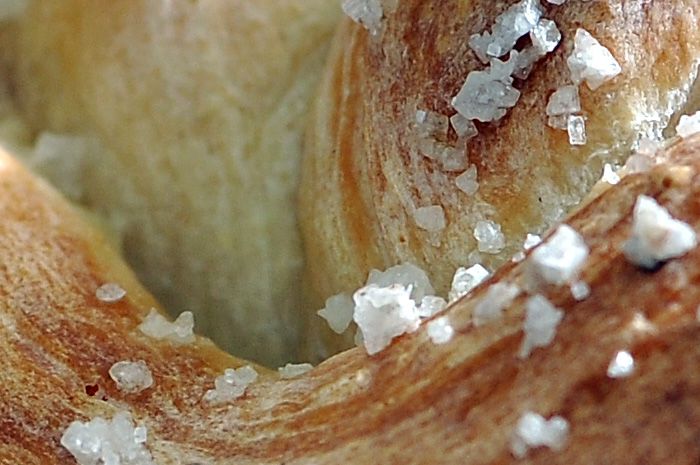
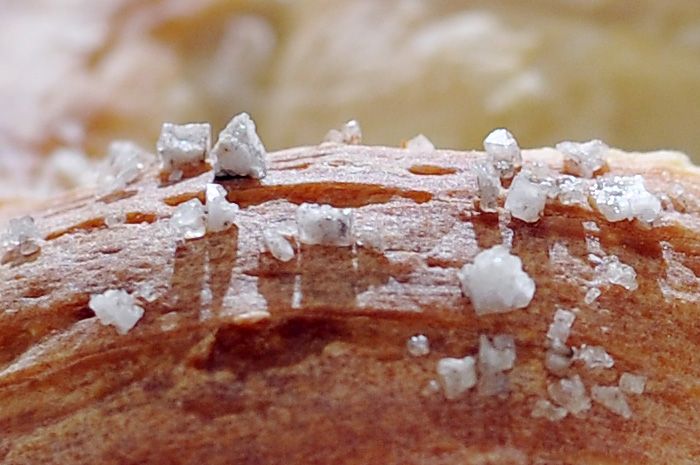
The lye is mixed to a bowl of water, never the other way around, water to lye. The water turns cloudy then clear just like salt (salt = sodium chloride, lye = sodium hydroxide). The pretzels are lifted to the lye solution and floated for a few seconds, then lifted out onto the baking tray. Coarse salt is added to the surface of the wet pretzels, then the tray goes into the hot oven. Then the lye-water is carefully tipped out into an empty sink, careful not to splash, whereupon the drainage pipes are suddenly cleared, or so I'm imagining.
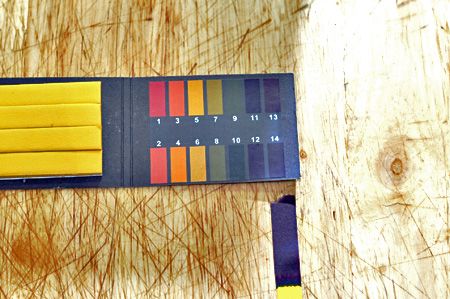
See it's right up there at 14. That's as alkaline as you can get.
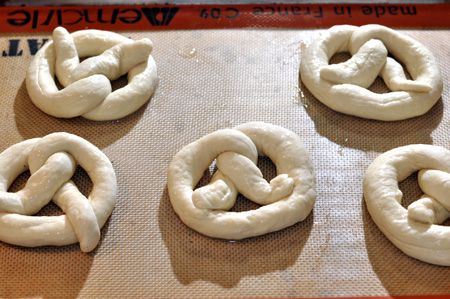
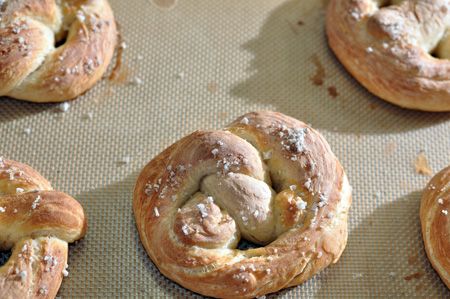
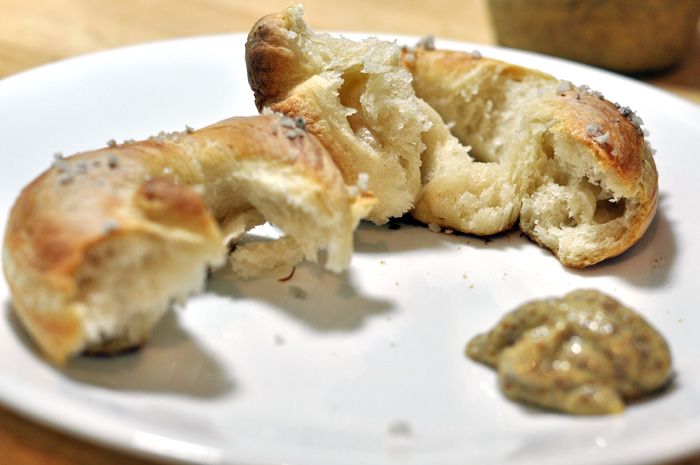
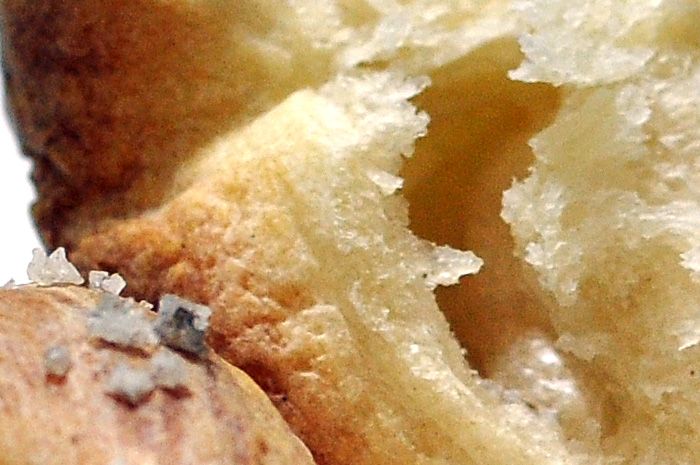
Previous pretzels here.
And here.