Showing posts with label popcorn. Show all posts

Tuesday, February 2, 2010

shrimp and scallop polenta


protein and sauce popcorn polenta

Thai curry, chipotle, garlic, mustard ↑

pineapple and mango ↑


Oh, my God, I almost forgot to put in a tomato! That would have left me tomatoless.

The pineapple and mango up there was frozen from fresh, and it sure comes in handy.

Notice butter and chicken broth is in both columns? I also added a little bit of wine and a tiny bit of sugar but I didn't show that. Also salt and pepper.

If I had coconut milk, then I'd have used that. [note to self: buy coconut milk]

This has become one of my favoritest things in the whole world. Popcorn polenta. With chicken this time. I do not know why. The chicken breast, pardon me, 'chest,' was thawed and must be used and because I wanted this to have a little bit more substance on account of I've been feeling very thin lately. Now that I have some discernible body fat, I want to keep it. It's fun. I like jiggling it. I set up little army men on my stomach and pretend they're taking the hill. I push it out and go around pretending I'm preggers. No srsly, I had a dream last night where I was showing off my six-pack abs, posing seductively and acting all sexy, then I woke up and thought, "You know what? That's disgusting. Stop it."

Saturday, December 12, 2009

red Thai curried popcorn

popcorn_closeup.jpg

popcorn_pot_cover.jpg

popcorn_ingredients.jpg

popcorn_bowl.jpg

*Three quart Magnalite pot
* splash screen

* one half cup popcorn kernels
* one tablespoon vegetable oil
* two tablespoons unsalted butter
* small pile grated Parmigiano Reggiano or some other hard cheese
* teaspoon red Thai curry
* 1/2 teaspoon coriander
* 1/4 teaspoon sea salt.

McGee page 480.

As the temperature inside the corn kernel reaches and passes the boiling point, the protein matrix and starch granules soften, and moisture in the granules turns into steam. The steam softens the starch even more, and the many thousands of little steam pockets exert a growing pressure against the hull. The softening of starch and protein continues until the internal pressure approaches seven times the external pressure of the atmosphere, at which point the hull breaks open. The sudden pressure drop inside the kernal causes the pockets of steam to expand, and with them expands the soft protein-starch mixture, which puffs up and then stiffens as it cools off, becoming light and crisp. (If the popping is done in a tightly covered pan that offers no escape for the water vapor, the endosperm will retain it and be tough and chewy; the pan lid should be left slightly ajar.)


Thursday, October 1, 2009

coffee grinder grits


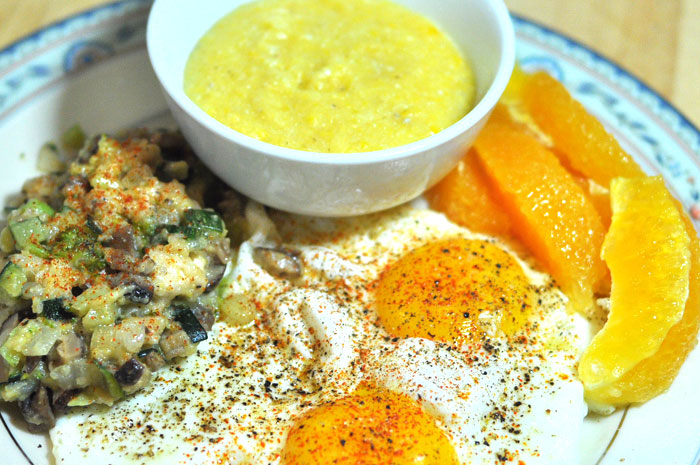
The green and beige stuff on the left is the chicken and mushroom and zucchini and broccoli filling used for arancini down there ↓.

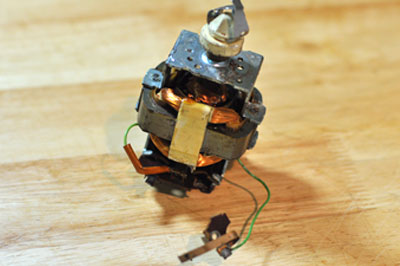
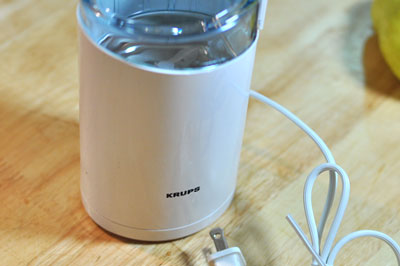
See, the 'popcorn milled in the coffee grinder' experiment had to wait for the arrival of the new coffee grinder. This is what is left of the old coffee grinder.


Poor thing. Autopsy went badly. This old work-horse was originally purchased to grind coffee but then performed double duty grinding spices. Then eventually became devoted exclusively to spices, mostly seeds sometimes breadcrumbs and such. After decades of use, hang on, *counts* yup, decades, I finally accidentally left it too close to a burner and melted the bottom. I thought I could fix it. Hey, I'm a guy, we think we can fix anything. Things were going along rather well until a tiny screw fell off the screwdriver. I imagined it was stuck to a magnet on the motor. I tried to get it. Wouldn't come out. Dug deeper. Tore it apart, and let me tell you, it was a bastard taking apart too. Toughest little machine I ever tore apart. It absolutely would. not. come. apart. I pounded it with a hammer and it wouldn't even crack. The blade wouldn't pop off nor unscrew. The shaft was fixed solidly through the body and would not be removed. I used a dozen tools. Brought out the heavy guns, finally I had to hack-saw the casing in five different places just to get this motor out. The body was in tiny plastic bits, and there was a huge pile of plastic dust by the time I was done. The blades bent upwards, and the tin cup destroyed. But I got the motor. Yay! Anyway, if the new one is built half as good as the old one I'll be quite satisfied. Incidentally, I think I paid $40.00 for the first one, and less than $20.00 for the replacement -- a bargain at twice the cost.

Then I found the tiny screw on the sofa cushion.

So there was that. Here's this.


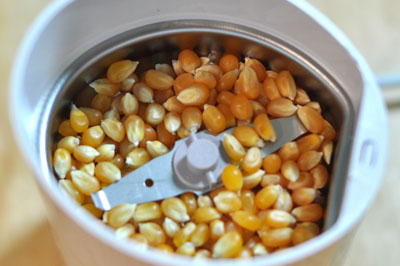
Conclusion: A coffee grinder can be used to mill popcorn for grits and the result will be a great improvement over pre-milled corn because the oil within the kernels is fresh and every element of the original kernels are in tact with no loss to processing, marketing, or transportation.

The result is uneven granules unless you continued to grind the grain to dust which is not what you want with grits. Stopping soon enough to preserve granules large enough to be considered grits results in a few overly large granules that must be removed and either discarded or re-milled. A sifter with sufficiently large holes would be helpful that would allow the right size granules to pass while holding back larger granules for further processing. I don't have one of those, but I intend to keep an eye out for one.

I do believe this concludes my messing around with popcorn for awhile.


Thursday, September 24, 2009

milled popcorn

OK Fine, so I'm obsessed. The purpose of this experiment is to see if the mill would work for popcorn and to see if popcorn could be used for polenta.

popcorn in mill

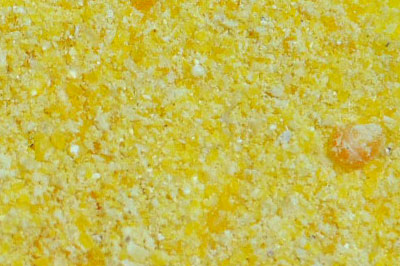
milled popcorn

polenta from milled popcorn

Conclusion: It does, and it can. In fact, it's qualitatively better than the unidentified milled corn whatever it is, either flint or dent. Popcorn is a hybrid, either one can be used for popcorn, I expect this is hybrid flint because there isn't a noticeable dent in the kernels. It grinds faster and more easily than wheat, which is surprising, although on coarse setting, the mill grinds more finely than commercial meal, and way too finely for grits. On fine this mill produces corn flour, which I suppose would make a very smooth cornbread or coating for fried foods, although less interesting texture. The ancients would have given their right arm for a mill like this. Or somebody's arm.

I suppose I should have made the polenta with water then tested for corn taste only. Oh well. I can still tell the fat in the corn is clear and clean, and there is no lingering sense of processing whatsoever.

This polenta was cooked in chicken broth and flavored with cayenne, arbol, and chipotle chiles with Parmisiano Reggiano, so the corn flavor was heavily masked. Even so, the corn flavor comes through nicely and more strongly than pre-milled corn.

Next experiment: Coffee grinder.