Showing posts with label pizza. Show all posts

Tuesday, February 15, 2011

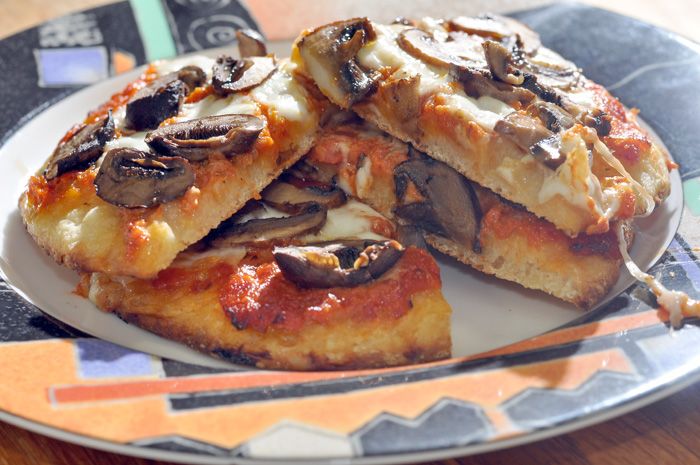
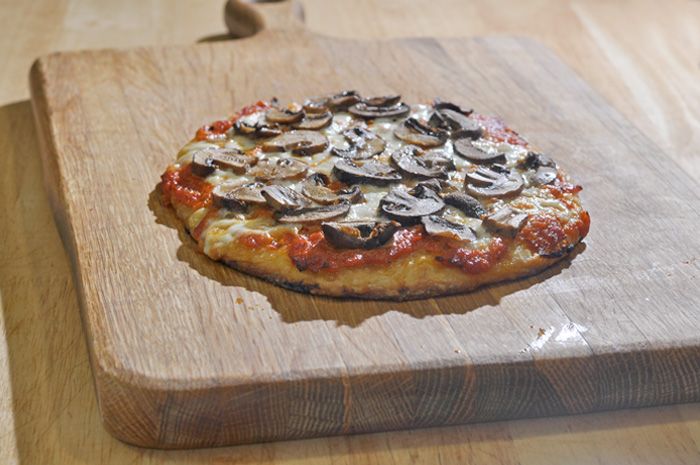
pizza, buffalo mozzarella and mushroom


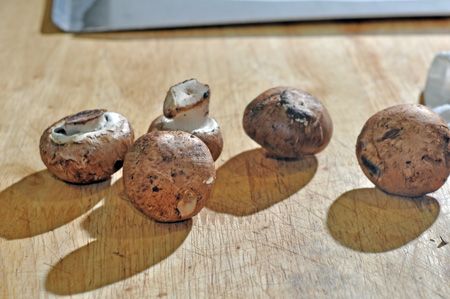
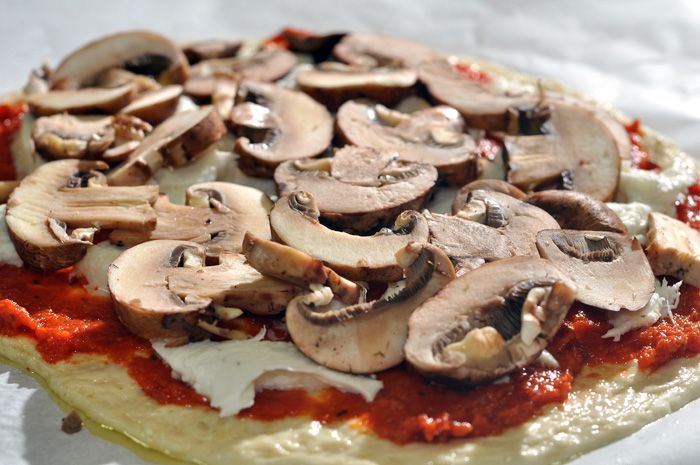
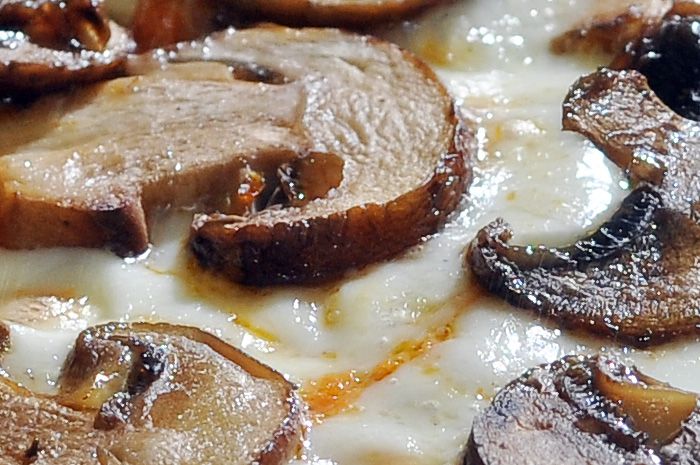
Eh, what the heck, pizza del fungi y mozzarella di bufala.

This is the last of four small pizzas derived from a small batch of dough that aged in cold storage for one day then two days then three days, then skip day four and day five, and now it is day six. This little dough wad is aged six full days, and what a difference that does make!

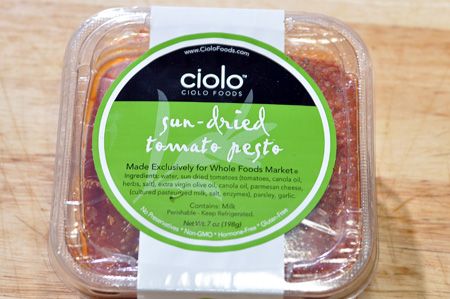
I must say, this is the best of all the pizzas. Its simplicity is exemplary. The combination of aged dough and mozzarella di bufala is outstanding. The commercial sun-dried pesto jazzed up with more sun-dried tomatoes does not distract. The coating of mushrooms is wonderful. I am sad now that it is all gone. But do you know what? I cannot believe I am saying this, but honestly, there is only so much pizza a boy can take day after day so this sadness is mitigated with love for variety. 

The three previous pizzas from this dough:
3) pizza peperonata without mozzarella bufala
2) sausage pizza with mozzarella bufala
1) plain mozzarella pizza mozzarella di bufala taste-test

Previous pizzas not from this batch of dough:

Thursday, February 10, 2011

pizza


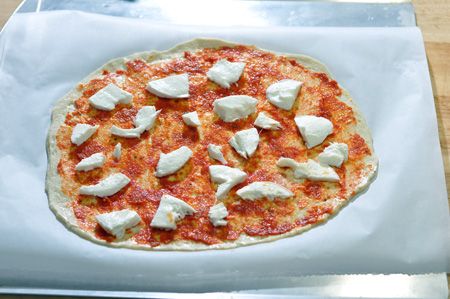
This is a simple Neapolitan style pizza. It's chief features are thin crust, some would say extremely thin, a faint layer of simple tomato sauce, some would say too faint, a scant tablespoon. This sauce is thick sun-dried tomato pesto with olive oil, Parmigiano and parsley. And finally fresh mozzarella cheese. 

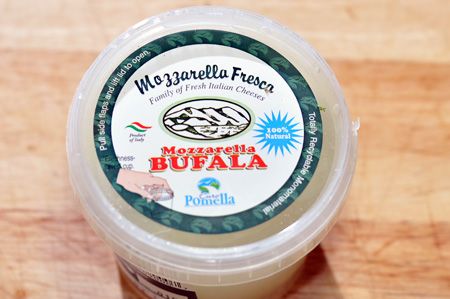
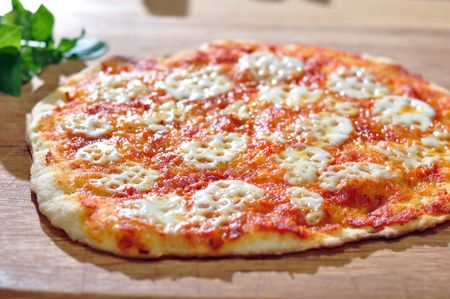
This mozzarella is different. It is the original mozzarella bufala used for pizzas, not American bison (don't even try to milk a bison, they'll kick your ass) but rather water buffalo raised in Campania the milk from which holds the official status of protected designation of origin. I didn't notice exactly but I think the cost is something like 3X regular fresh American mozzarella from cows, I could be wrong. I recall the first time I saw this cheese a year ago I thought in the moment of consideration, "You're out your minds." But I've been thinking about it ever since and decided to test it to see for myself if it deserves its reputation. I was prepared to be disappointed and readied myself to disparage it here. I admit to being cynical and completely wrong in my expectation about this cheese. I can see now that what I've known as mozzarella both fresh and hard is a pale imitation of the real thing. I have never in my life ordered a simple cheese pizza -- what would be the point? Or so my thinking went -- but here I had to keep it very simple in order to taste-test the cheese and I do believe this is the best pizza I have ever enjoyed. The whole thing lasted all of four minutes. 

The pizza dough is aged one day. This is 1/4 the total dough prepared so 3/4 of the dough is still aging. The dough is 20% semolina flour 80% AP flour. A few herbs were thrown in on impulse. 1/2 teaspoon active dry yeast combined with dry ingredients. Hot water poured into the dry ingredients while it processed quickly at first then slowly as 1 cup was approached, carefully monitoring to stop pouring as soon as a ball of dough formed and pulled away from the bowl while processing. It continued to process for approximately 30 seconds. Chilled immediately.

* two pizza stones, top and bottom.
* pizza baked directly on the bottom stone
* the stone draws off moisture from the dough causing it to crackle
* a cookie sheet without a rim is taking the place of a pizza peel
* parchment paper is taking the place of corn meal or semolina which behave as ball bearings to slide the pizza off the peel into the oven but also make a mess in there and burn. 
* the parchment paper is removed while the pizza bakes so that the dough makes direct contact with the stone.
* the pizza cooks for anywhere between 7 to 10 minutes depending on its size, the load of ingredients, its thickness, the heat of the stones. 
* tongs are used to grab the edge of the cooked pizza and slide it back onto the cookie tray
* fresh herbs added after cooking so they don't just shrivel and burn.

Conclusion: when it comes to pizzas, use the best ingredients available and keep it simple. 

Is the mozzarella buffalo worth it? I would say yes. I would be able to tell immediately one from the other and appreciate the difference, but I must hasten to add that most of the people I know wouldn't appreciate the difference and that includes all of my own family. In fact they would ridicule it if it were pointed out and reaffirm their preference for hard mozzarella over fresh mozzarella. I resist being so negative about it but I've learned to face the fact that is just the way it is. 

I had PBS on mute, the subject was American bison. Suddenly a scrawny dusty cowboy appeared on camera, he was wearing a prototypical red neckerchief and a weird kind of cowboy hat that was round on the top. I thought, "This should be interesting," so I turned on the sound just in time to hear him say in the most incredible Western accent I ever heard, like that guy Festus on Gunsmoke, I think, the guy who limped, I think. I don't know, some very strange Western character who then said,

"There ain't no fence around bin invented yet that ain't nuth'n more 'n a suh-jes-tin to a buffalo. "

I fell out laughing because he was entirely serious. If he were putting us on it wouldn't have been funny but his authenticity totally cracked me up. Of course there are fences that do keep in bison but they are sturdy enclosures indeed and the guy did make his point that bison are undomesticated animals and difficult to manage.

I went around for days repeating that line in his voice and cracked up all over again, "There ain't no fence around that's more than a suggestion to a buffalo." Should I ever burst out laughing at an inappropriate moment, somewhere solemn, say, at church or on an operating table or something, it will be because my thoughts randomly took me to that. 

Previous pizzas:

Sunday, December 21, 2008

peperonata pizza

Peperonata. Should be pepperonata, if you ask me. Capsicum, member of the nightshade family, Solanaceae, as are tomatoes, both native to the Americas. Hear that? Americas! And over here we call these things peppers, and we spell the word with two Ps, for reasons of our own, well, that and a slight misunderstanding begun by one Signor Cristoforo Colombo. So we should be the ones to name all dishes consisting mostly of peppers and tomatoes, no matter who thinks they invented them. Because I said so!

A friend and I are always silly together. For some reason we find the word "capsicum" especially funny pronounced delicately in precise British accent. We say the word to each other out-precising each other and cracking each other up. We're like children. Annoying children.

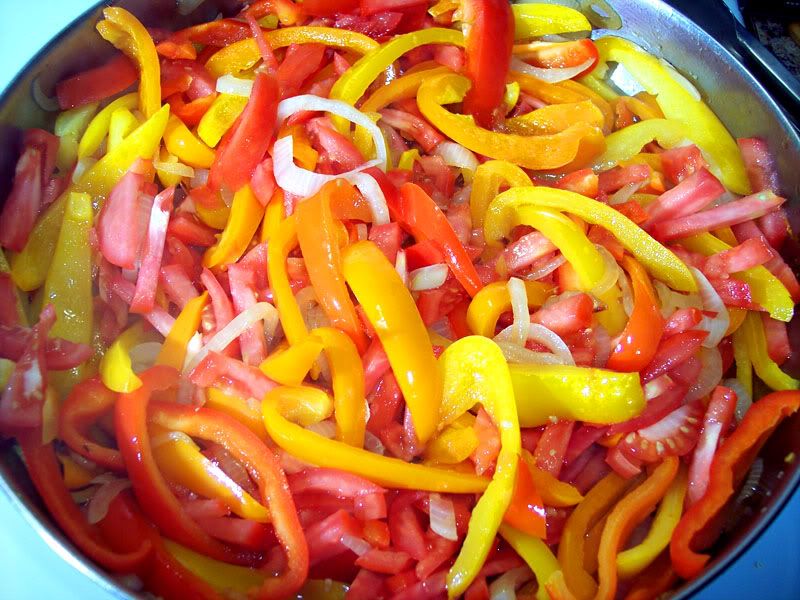
bell peppers
Six capsicums of various colors. Ha ha ha ha ha ha. See? I told you it's funny. Six bell peppers, two large onions sliced thinly, sautéed then cooked on low for a very long time, like hours. Oh, I don't like doing that to vegetables. It runs counter to my culinary religion. I'm sorry, Tomatoes, this is not my idea. You know how much I would prefer to use you raw, but that will not work here.

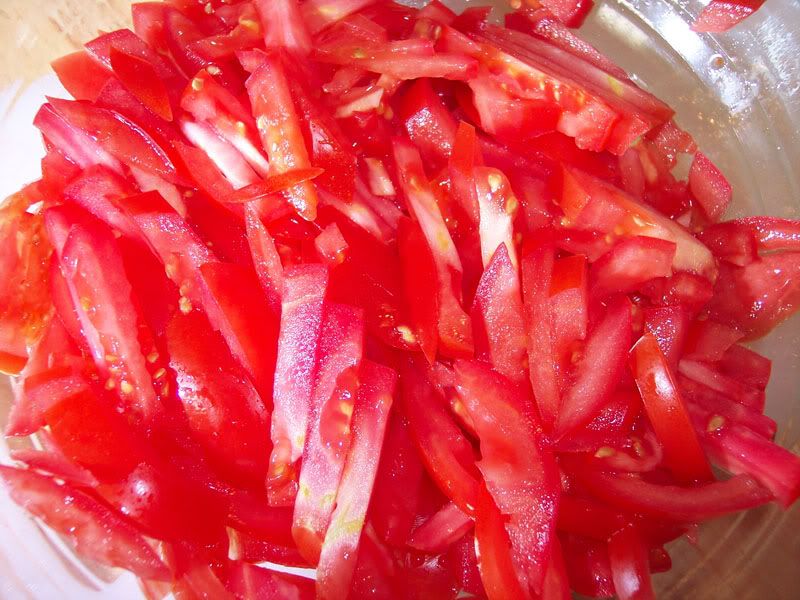
sliced tomatoes
Peperonata keeps well for about a week, maybe a little longer if you're lucky, and can be used many ways, as we shall see.

Not pictured above, green Anaheim chile peppers added iconoclastically for BANG ! But not too much bang because that would wreck the whole thing.

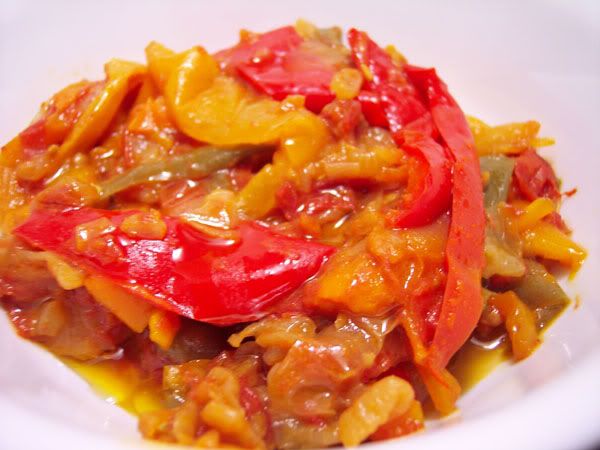
Finally, at length, following a tortuously long simmering and reduction of liquid. Six colorful and perfectly lovely bell peppers and four significantly beautiful tomatoes look like this.

peperonata
This mixture is sweet. Sweet with a fleeting zing of heat from the Anaheims which were hotter than usual. And although it tastes fantastic and is perfect for many things, it still makes me a little sad to do such a thing to such wonderful vegetables that are so good just as they are. The only thing added here was a drizzle of salt onto the initial sautéing of onion with the butter and olive oil. Tasting it, you'd insist sugar was added but it was not.

On to the pizza.

~~~~~~~~~~~~~~~~~~~~~~

Peperonata pizza.

The dough for the pizza has already been detailed in the previous post about pizza Margherita.

Obviously, since peperonata pizza follows the day pizza Margherita was made, and the dough for pizza Margherita was aged for a day, this dough, the second half of that same batch, has been aged for two full days, effectively doubling it's agey goodness and character. Alert pizza eaters will notice a distinct tang imparted to the dough, that is if it hasn't been overwhelmed with an outrageous cornucopia of toppings in conflict, which this one hasn't. And when it is gone, that alert pizza eater will yearn for more even though their stomach is bulging from stuffing their pizza holes.

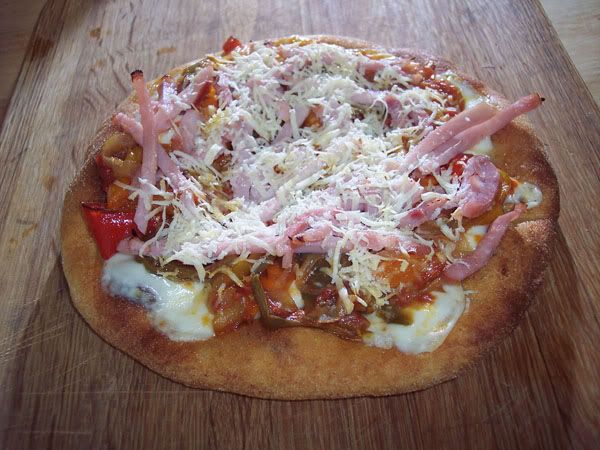
I must admit to being a little bit sad. Sad because I bought a package of prosciutto specifically for this and when I went for it I could not find it. This sends me up the wall because I'm quite good at putting things where they belong and I don't have anybody else to blame. This is the second time in a row I left that same store with something missing I paid for. I'm beginning to suspect foul play, either that, or incompetence. First no mozzarella di bufala and now this. What's a boy to do? Innovate! That's what. I still have some honey baked ham which is perfectly good so I used that instead of prosciutto which I paid for but don't have, and believe me, I looked everywhere. (Except for the truck, it could still be in there, but I doubt it because I tied the bags tightly before loading, and went to the garage twice for other things.) I tell you, I'm going to have to stop yacking it up with the checkout clerk and give my full attention to every move of the bagger.

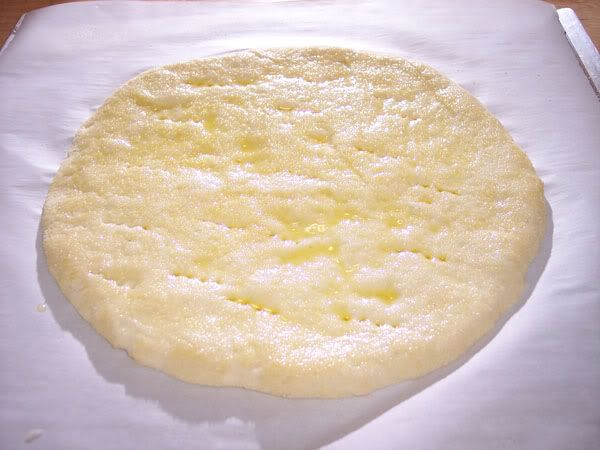
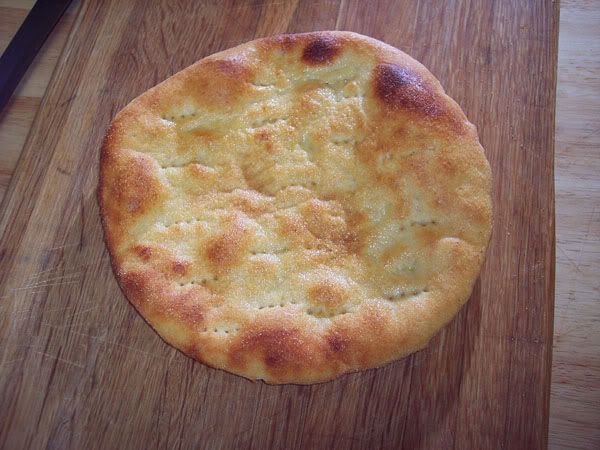
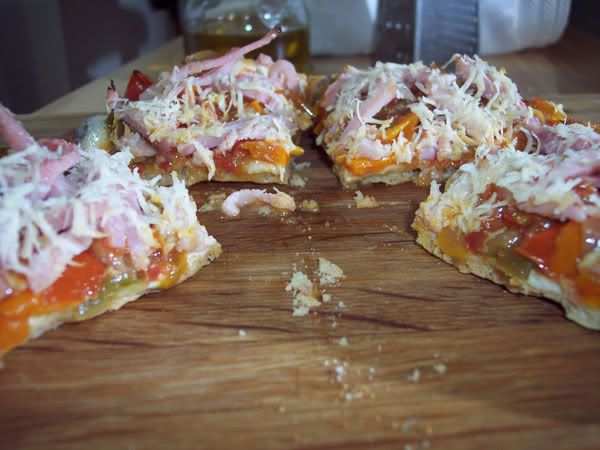
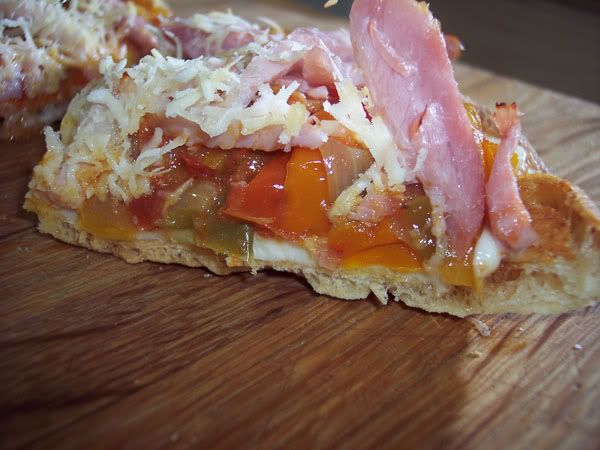
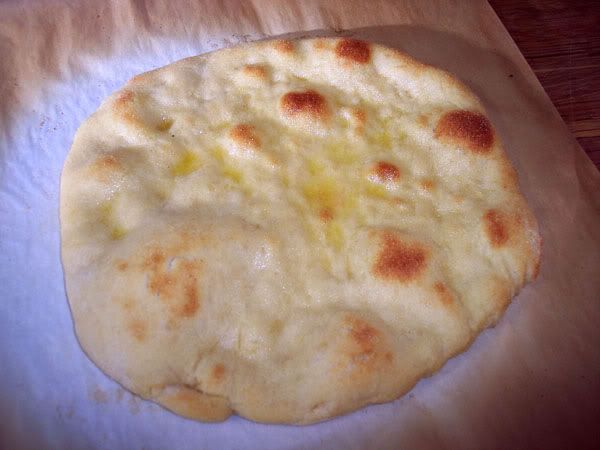
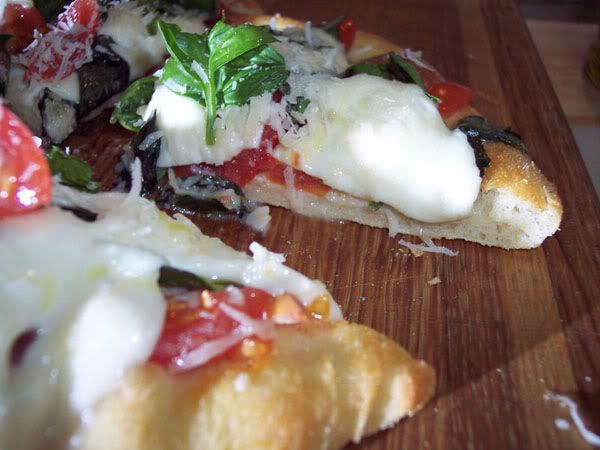
We will not let these setbacks interfere with the glory of our peperonata pizza. Again, we toast the bread first. Moisture is pulled from it by a hot stone. The crust becomes crispy, then the toppings are added and heated through. No burning of cheese, no drying out of toppings, no puddles of oil filling tiny pepperoni cups. The crust crackles crisply when it's cut. It possesses more Old-World flavor and texture than ordinary un-aged bread. It is thin but it is sturdy and it holds up to toppings nicely. It does not become soggy or tough. Behold.

pizza dough unbaked

pizza dough
pizza baked
pizza cut

pizza slice


Saturday, December 20, 2008

pizza Margherita

Let's make a pizza, shall we?

Yes? Oh, you're so agreeable today.

The thing is, our dough will be improved if we let it age for a day, or for overnight if we're in a hurry. So let's get started now for a pizza tomorrow. It's all about the dough, after all. Well, that and the topping.

This will be a classical pizza in the style of the Margherita, which owes its success to its thin crust and to simplicity. No double stuffed crusts for us, no siree, those thick crusted bread-type pizzas are more properly termed torts, and monsters at that. And no garbage-can toppings for us either, which are exactly that, an embarrassing profusion of conflicting flavors. Pizzas were designed to be folded in half, if you can not do that then you're eating something else -- a mutant pizza.

The crust should come close to being a cracker. Although we're making bread dough, we're not concerned with producing a flat loaf of bread. Pizza is un-risen bread. Otherwise it's focaccia with topping, which isn't altogether bad, it's just not a pizza.

After years of making every error known to bread baking, at least once to understate matters, and as an avid noodle maker, I've arrived at a wonderful tasting pizza dough. I prefer roughly 60% -- 80% AP flour with 40% -- 20% semolina, roughly estimated. For one medium size personal pizza I like to start with 1/2 Cup of water and a scant 1/4 teaspoon yeast with enough flour combination to produce a stiff dough.

Salt does yeast cells no good whatsoever. It kills them. Yeast cells hate salt. But dough without salt is blah, and salt is not so lethal that a small amount of salt can kill a large number of yeast cells. Salt is essential to the aging process of dough. It tends to retard it. Therefore, we'll add salt and age our dough overnight.

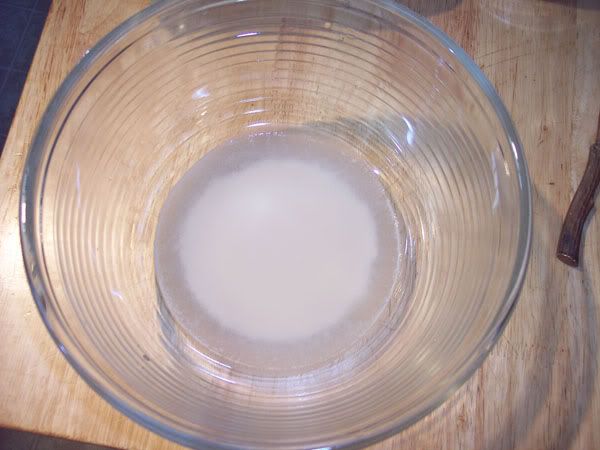
Observe my mad dough-making skillz as I estimate these amounts for tomorrow's dough. I'll estimate 3/4 Cup water and 1/4 teaspoon of yeast granules and let them hydrate for a minute. I'm not letting it proof because my yeast has got nothing to prove. I know it's good. I used cold water because I'm not concerned with hyperactive yeast cell activity, in fact, quite the opposite.


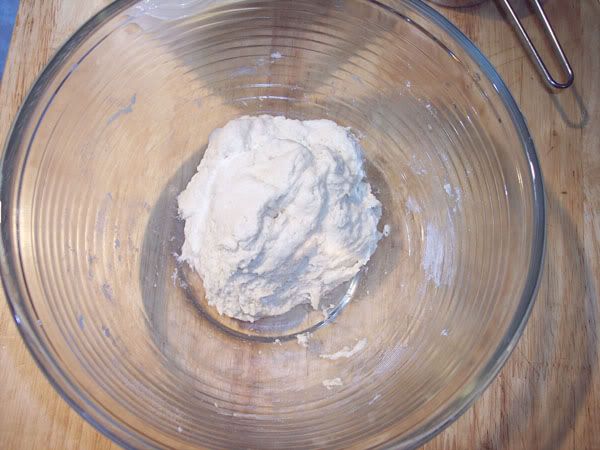
Added 1 Cup of AP flour and estimated 1/3 Cup Semolina flour and mixed. The dough came out a little bit too wet.


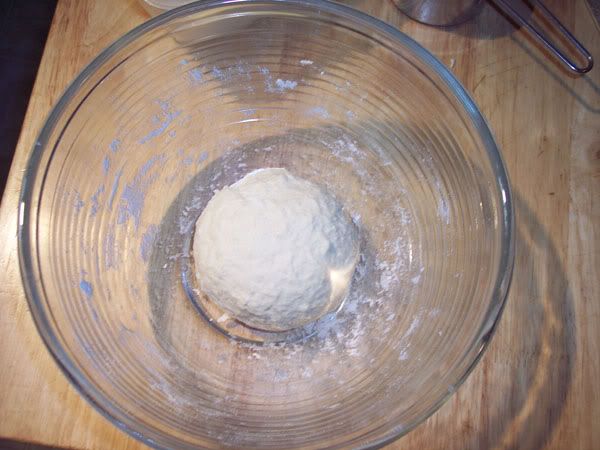
Corrected with about 1 teaspoon of AP flour.


I played with the dough ball. Stretched it out in my hands like a pancake. Rolled up the pancake into a snake. Coiled the snake. Turned the coil inside out. Stretched into a pancake again. Snake. Coil. Invert. Pancake. Snake. Coil. Invert. Pancake. Snake. Coil. Invert. Yay! While in the form of a pancake, I sprinkled it with salt, knowing the yeast inside which was just getting started, all went, "Ouch! There goes our perfect environment." That's all the kneading this dough is going to get, although it will be stretched tomorrow. It was covered in plastic and placed in the refrigerator where the chill will assure the yeast never gets a chance to develop into bread, but it will rise a little, just to get smashed down again and stretched out tomorrow.

Tomorrow, the toppings, and we're going to go simple.

~~~~~~~~~~~~~


Does semolina scare you? It shouldn't. It's just a rougher, simpler form of flour usually but not always made from hard duram wheat grain. Large commercial milling operations use steel rollers that are adjusted for the space between them to be slightly more narrow than the width of wheat grains. As the grains pass through the rollers, as violent an experience as any grain would be expected to endure, the bran and the germ are flaked off and the endosperm, which is the starch portion, is cracked into coarse pieces. Ouch. Sifting separates the bran resulting in semolina. To produce proper flour, the semolina is ground further. This approach simplifies separating endosperm from bran and germ and makes it possible to grade endosperm to create different types of flour of varying protein levels; low for pastries, mid range for AP, and high protein for bread.
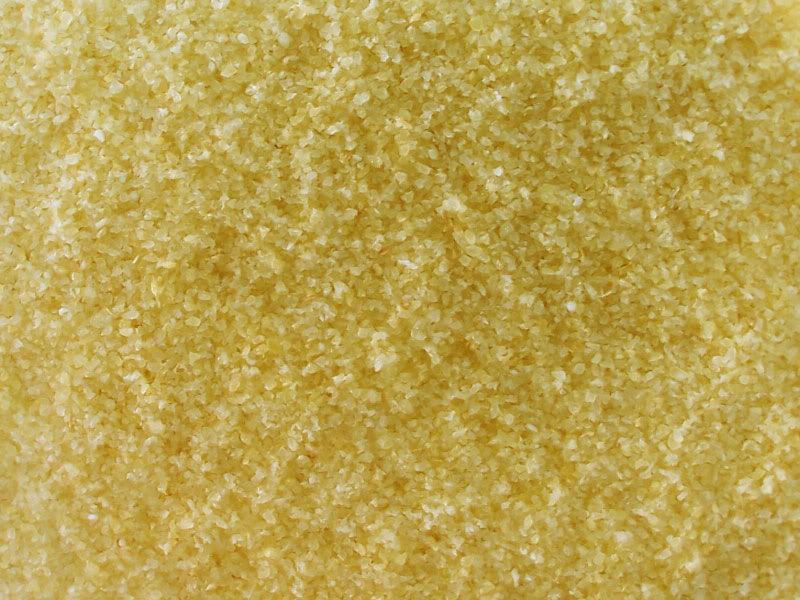
Semolina from soft wheat is white and marketed in the US as Cream of Wheat, and semolina milled from hard duram is used for pasta, gnocchi, etc., it is yellow in color and if you were inclined to examine it with a loupe, as I am, or to photograph it with a macro lens, it looks like this:

semolina
In'nit purdy?

Semolina (sometimes cornmeal) is the ball bearings sprinkled on a peel used to slide a pizza into an oven.

Semolina is essential for making pasta, and don't let anybody tell you differently. I absolutely do not understand why cookbooks describe noodle-making using only AP flour. That's ridiculous. The result is a limp anemic noodle that cannot hold up to a sauce and so vapid as to be hardly worth the effort. Some pastas are produced with 100% semolina. But that's another story. Right now, we're interested in the relative coarseness of semolina improving our pizza dough.

I buy semolina from Whole Foods in bulk from the bins and keep it refrigerated. It's ridiculously inexpensive. How I do adore those bulk bins. They're so fun! Conversely, you can buy it in small quantities prepackaged and found in most grocery store baking sections along with other milled grains and marketed as if they were something specialized and fabulously expensive. Oh, clever cook and wise consumer, the choice is entirely yours.

~~~~~~~~~~~

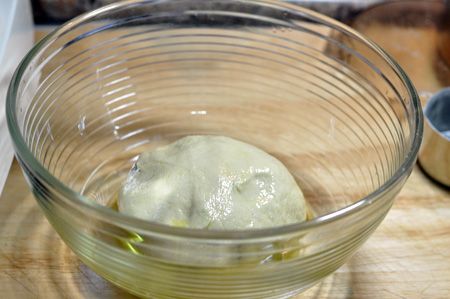
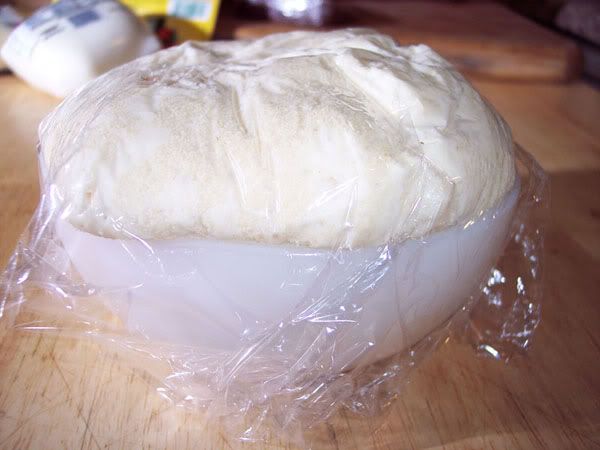
It has now been twenty-four hours and our pizza dough has aged nicely. I like the smell of it. It has risen inside the refrigerator even though we started out with a scant 1/4 teaspoon of dry active yeast, and we didn't bother to proof it, and we added salt early, and we used cold water to start with, and we put it into the refrigerator right off, all of which act to retard cellular reproduction. It grew anyway. As you can see, it over doubled its size.

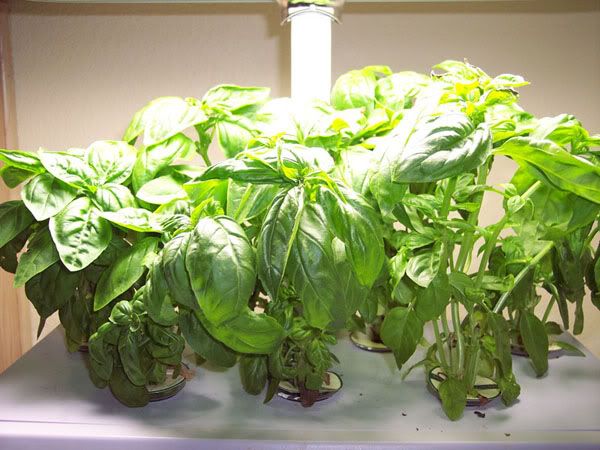
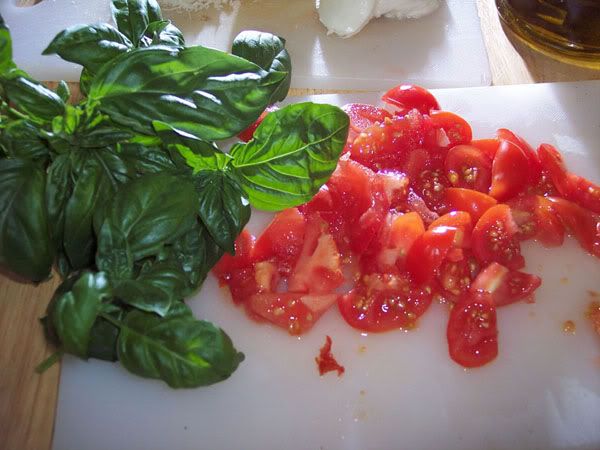
The basil is from the AeroGarden, splendid thing, dedicated entirely to basil, which is my favorite fresh herb, and which I can not seem to ever get too much.

We are not using San Marzano tomatoes which are available only in cans in the US, not an altogether bad thing, but not as good as fresh, in my opinion, and who do they think they are anyway? Grown on the volcanic slopes in the shadow of Mt. Vesuvius, pish tosh. Well, we've got volcanos too! If you listened to those European guys you'd think they invented the tomato, which they didn't, it's a New World fruit. In fact, they thought it was poison at first, related, as it is, to the nightshades. But let's not get worked up about that, we have perfectly fine hot house tomatoes all through the year. I'm using a mix of two sweet types.

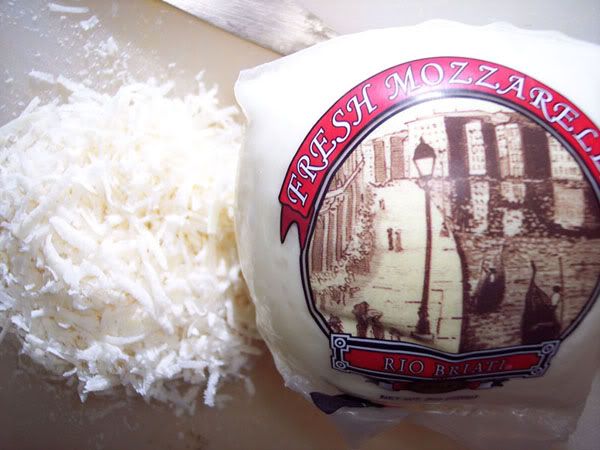
We were not able to obtain Mozzarella di Bufala, which is sad because it's a requirement for pizza Margherita, and it won't be available until Spring, and this intolerable situation leaves us no choice but to use cow mozzarella. Oh well, they're both bovine so it can't be that bad, but it will take our pizza down a notch, and this cannot be helped. Incidentally, by buffalo, they mean water buffalo, and not American bison which is a whole 'nuther animal.

A few words about Parmigiano Reggiano. The real thing is the life blood of the people of Parma. If you have one of those green cylindrical containers of Kraft parmesan in your refrigerator, walk over there right now and throw it out, and I'll never mention this to anybody. That crap is the culinary equivalent to ground toenails and a rude and cruel hoax perpetrated upon an unknowing public. You do to everything you sprinkle it on a great disservice, and it advertises that you don't know what you're doing and that you don't care to know. Yes, Parmigiano is expensive, but believe me, it is worth every cent and a bargain at twice the cost. It takes something like 16 gallons of milk from a single species of cow that have grazed in a specific location, from a specific period of months of a year to produce 1 LB of Parmigiano Reggiano.  All of this is all tightly regulated to guarantee quality. [Let see here; According to the internets, the vats that hold the milk produce two large wheels of Parmigiano Reggiano cheese that weigh 75 to 80 LBS. Look for a full cheese wheel on the internet and it's most likely 75 LBS. The vats that produce two wheels contain 1050 litres. If Litres means liters, then 1050 liters = 277.38 Milk weighs on average 8.5 LBS per gallon, depending on its fat content. 277.38 Gallons X 8.5 LBS per gallon = 2,357.73 LBS ÷ 150 LBS for two cheese wheels = 15.71 Gallons of milk per pound of Parmigiano Reggiano cheese.] Imagine buying 16 gallons of milk. That's what you're doing when you buy one pound of Parmigiano Reggiano. Now quit complaining, and marvel!

We are not using a sauce. Why should we? We have tomatoes!

Turn the oven on as high as it will go. Don't let all those warnings and alarms dissuade you, it really needs to be hot.

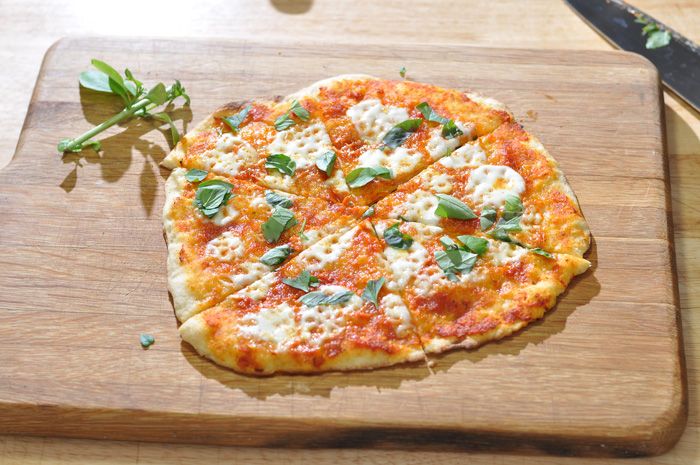
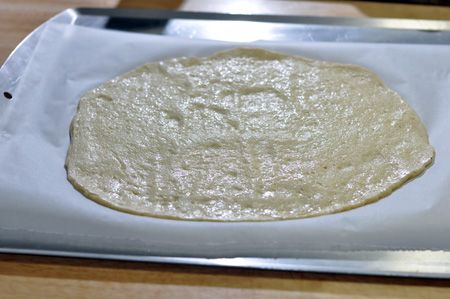
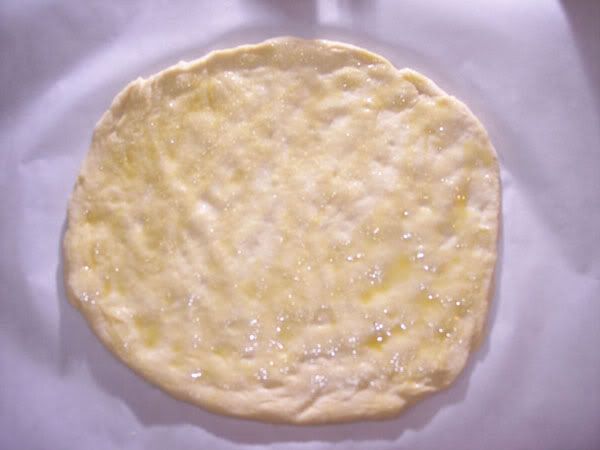
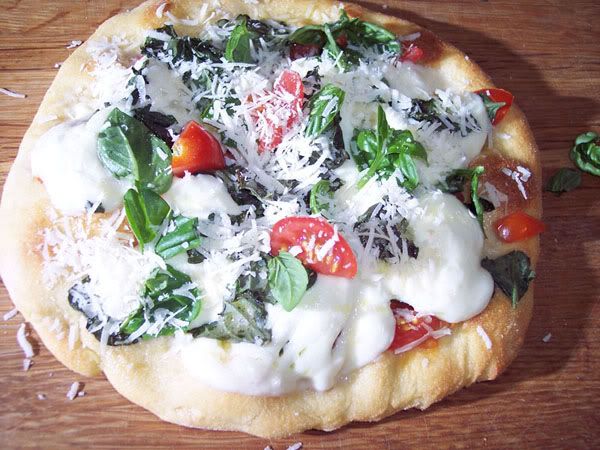
The dough is stretched thin, not rolled, and lightly oiled and baked, then the toppings are put on sparingly, they're drizzled with additional oil, and returned to the oven to warm through.

Sea salt to finish.

It must be said, even if I must say it myself, this is the best pizza you're ever likely to taste. No brag, just fact.

AeroGarden basil
dough
mozzarella
dough stretched
basil and tomato
dough baked
pizza baked
pizza slice
Tomorrow, since we have the pizza dough all ready to go, and because the oven will be hot to make sourdough loaves, and because this was so good I can't stand it, we'll go on and make another, less traditional pizza.