Sourdough starter, Carl's 1847 Oregon Trail. Anything you would read on sourdough starter maintenance will tell you to feed your refrigerated starter at least once every few weeks to keep it active. I do not do that. I have too many starters and I bake bread too infrequently to keep that kind of schedule. If you think about it, though, what difference is there between dried yeast in complete suspended animation and starter kept in retarded activity in cold storage? Reviving a starter from slowed animation in cold storage can be done at room temperature, but reviving from complete suspended animation requires a little heat.
This starter appeared dead as a few tablespoons of window putty. I added an equal amount of fresh water by weight and enough fresh flour to get a loose slurry, then set the jar on the stove top with the oven on low, careful not to let the heat surrounding the jar exceed 100°F. This was about 10:00 PM. The next morning the slurry showed signs of activity but not much. Doubled the amount of water by weight again, and again added enough fresh flour to create a loose slurry, about 1/2 Cup total volume. Within a few hours the slurry foamed to the top of the quart size Mason jar where it's pictured above. That's how powerful Carl's starter is.
But this is only the yeast portion of the culture springing into reactivation while the bacterial portion of the culture lags behind. Bread made at this point would have almost none of the sourdough characteristics that make it worthwhile. For that, we must allow the sponge to ferment. The extent of fermentation will determine the degree of sourness of the bread.


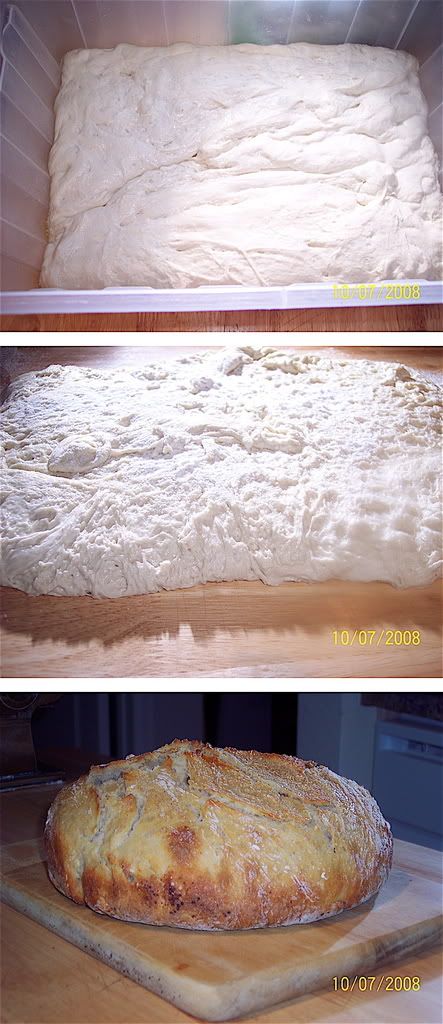
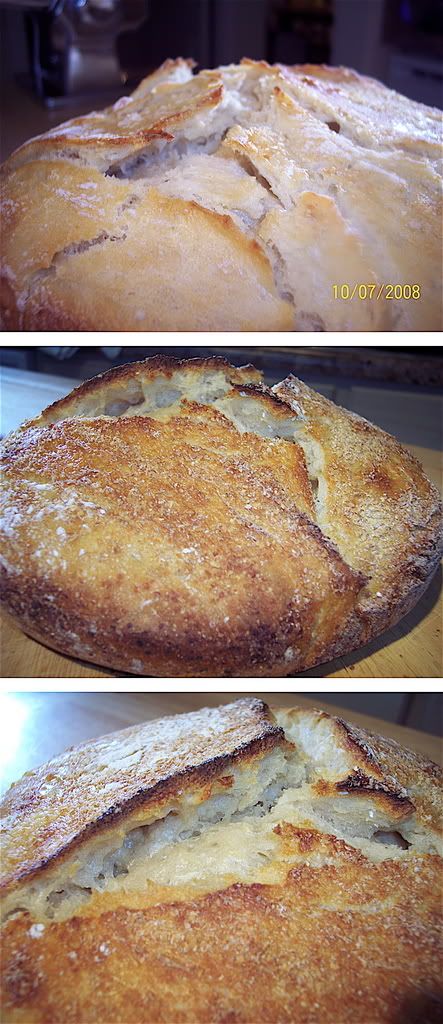
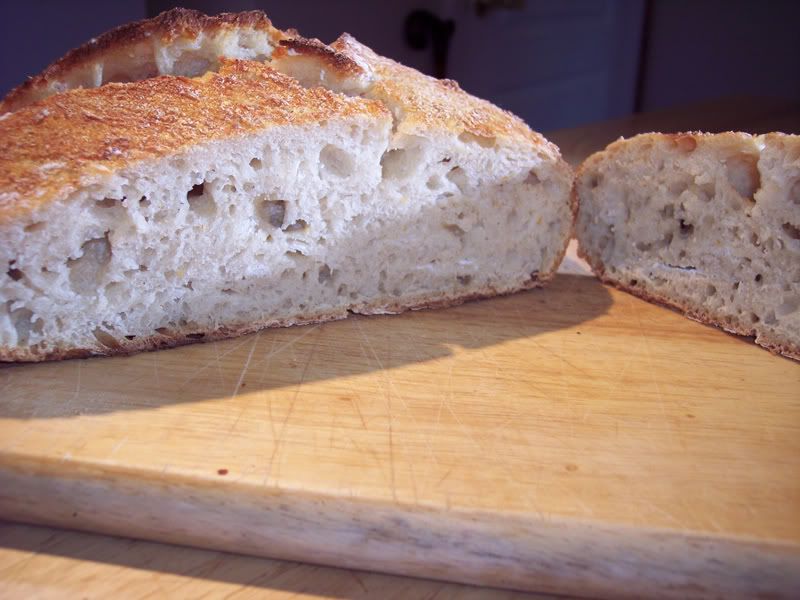
The sponge in the jar was fed in increments doubling its weight and proofed for periods of eight hours until eventually it filled this storage tub to approximately 1/5 of its depth with knocked-back foaming sponge. It rose again to about the half way point then it was put into cold storage for three full days where it continued to rise although more slowly to the top, then fell back. On the fourth day, it was removed from the cold, gently warmed for a few hours, and then overturned onto a work surface where it collapsed. It appeared to be enough for six loaves so the sponge was divided into segments. Working with two at a time, the segments were gently pulled to redistribute the yeast, salted, and folded into thirds, turned 45° and pulled and stretched again in the opposite directions, salted, and folded in thirds again resulting in a stack of stretched and salted folds that were gently shaped into loaves. During this folding, while still flattened, the surface was dampened with tap water to adjust the wetness to be loose as possible in order to allow maximum oven-rise within the baking cloches during the initial period of baking. The clay cloches were designed for roasting chicken and meats. They were used upside down so that the loaves could sit on the smooth surface of the lid and not on the ridges designed to elevate a chicken or a roast. The loaves were baked two at a time. The sponge that stuck to the sides of the storage tub was scrapped off and kneaded into a seventh loaf.